High Intent Keywords: The Complete Guide to Finding and Targeting Search Terms That Actually Convert
Here's a misconception most SEO beginners hold for way too long: more traffic equals more revenue. It feels obvious. More visitors, more customers, right? Wrong. The keyword with 50,000 monthly searches that brings you zero sales isn't an asset. It's a distraction. High intent keywords fix this, and once you understand them, you'll never look at keyword research the same way again.
A high-intent keyword is a search query that suggests the user is close to taking a commercial action. Think of it like the difference between someone walking into a shopping mall "just to browse" versus someone who walks in with a credit card out, saying "I need to buy a birthday gift in the next 20 minutes." Same building. Completely different buying readiness. High intent keywords are the digital version of that second person.
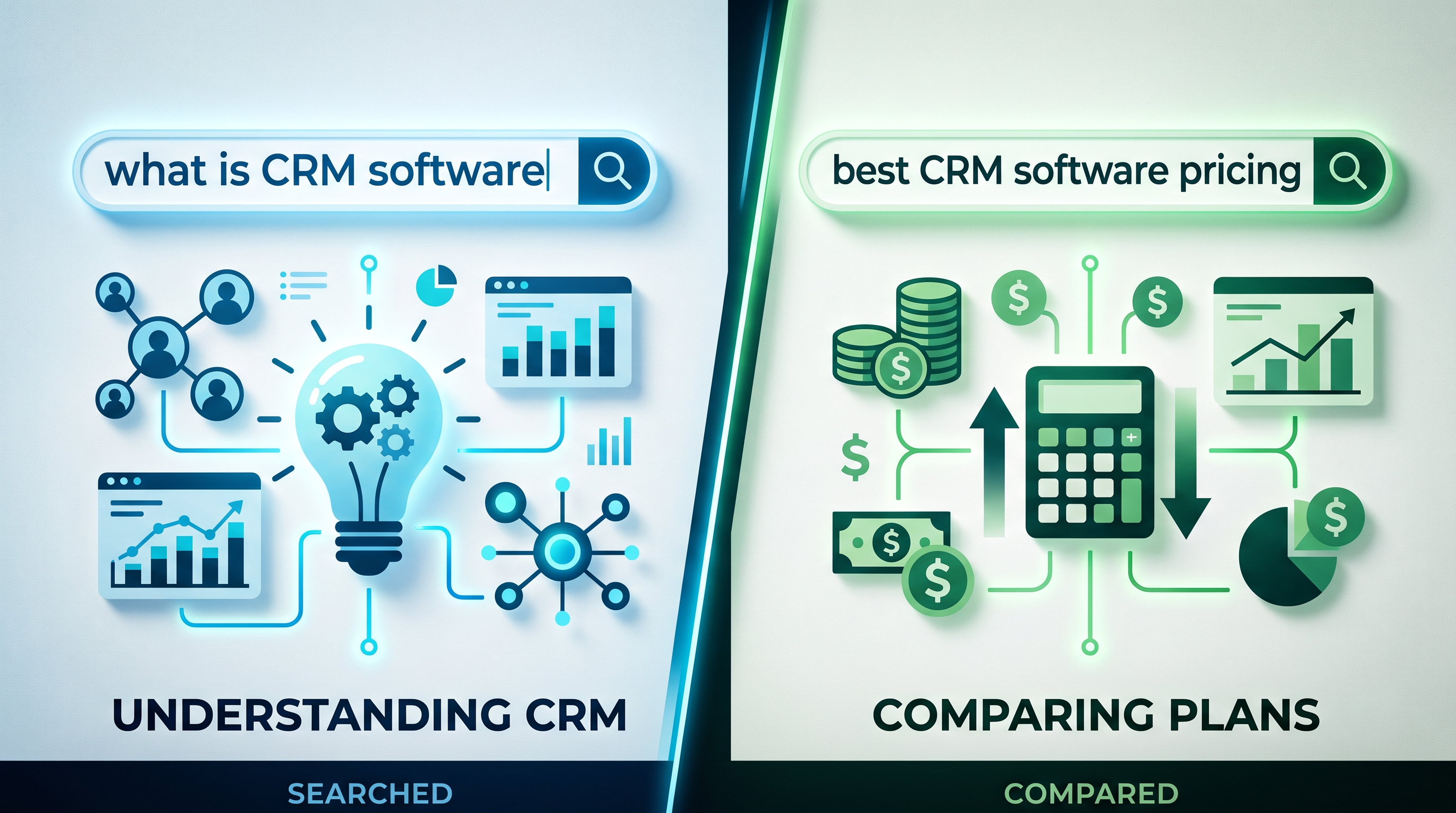
What Are High Intent Keywords (And Why Should You Care)?
High intent keywords, also referred to as buyer intent keywords or commercial intent keywords, are phrases people use when they are ready to make a decision. These are terms with high conversion potential, meaning people who search for them are more likely to take an action or make a purchase. They come from users who are already deep in the funnel. They are not just searching, they are ready to buy, subscribe, or take the next step toward conversion.
The numbers back this up hard. Long-tail high-intent keywords have an average conversion rate of 36%, while standard landing pages only have an average conversion rate of 11.45%, meaning you could get more than three times as many conversions. A term with 50 monthly searches and an 8% conversion rate generates more leads than a term with 5,000 monthly searches and a 0.1% conversion rate.
In 2026, this distinction matters more than ever. AI Overviews reduce clicks on many top-of-funnel searches, and buyers now use ChatGPT, Perplexity, Claude, Gemini, and other assistants to summarize definitions, compare basic options, and narrow down categories before they ever visit a website. Google's AI Overviews and Search Generative Experience now dominate informational queries. If someone just wants to learn something, AI gives them the answer directly with no clicks. But high-intent users still click through to take action.
The Four Types of Search Intent (A Quick Map)
Before getting into the tactics, you need a mental model. All search queries fall into one of four intent categories, and high intent keywords live in the bottom two.
| Intent Type | What the User Wants | Example Query | Typical Conversion Rate | Intent Level |
|---|---|---|---|---|
| Informational | Learn or understand something | "what is CRM software" | 0–1% | 🟢 Low |
| Navigational | Find a specific brand or page | "HubSpot login" | High (existing users only) | 🟡 Medium |
| Commercial Investigation | Compare options before deciding | "best CRM for small business" | ~10–15% | 🟠 High |
| Transactional | Complete a purchase or sign-up | "CRM software free trial" | Up to 36% | 🔴 Very High |
For practical purposes, high intent keywords = commercial investigation + transactional intent. These are the queries where your content needs to be built for conversion, not for education.
High Intent vs. Low Intent: A Side-by-Side Comparison
The easiest way to internalize this concept is with real examples. Notice how the intent shifts across the same topic area:
| Topic | Low Intent (Informational) | High Intent (Commercial/Transactional) |
|---|---|---|
| SEO Tools | "what is SEO" | "best SEO tool for agencies pricing" |
| Project Management | "what is project management" | "project management software for remote teams free trial" |
| Running Shoes | "running shoes" | "buy Nike running shoes online size 10" |
| Dentist | "what does a dentist do" | "book dental appointment near me same day" |
| Marketing Agency | "what is a marketing agency" | "hire marketing agency near me" |
A page that ranks for "best project management software for remote teams" will generate inquiry-ready traffic even at 200 monthly sessions. A page ranking for "what is project management" at 20,000 monthly sessions may generate almost no leads.
Key Insight: A keyword is not valuable because many people search it. A keyword is valuable because the right person searches it at the right stage of the decision process.
The Buyer Intent Progression (Save This Framework)
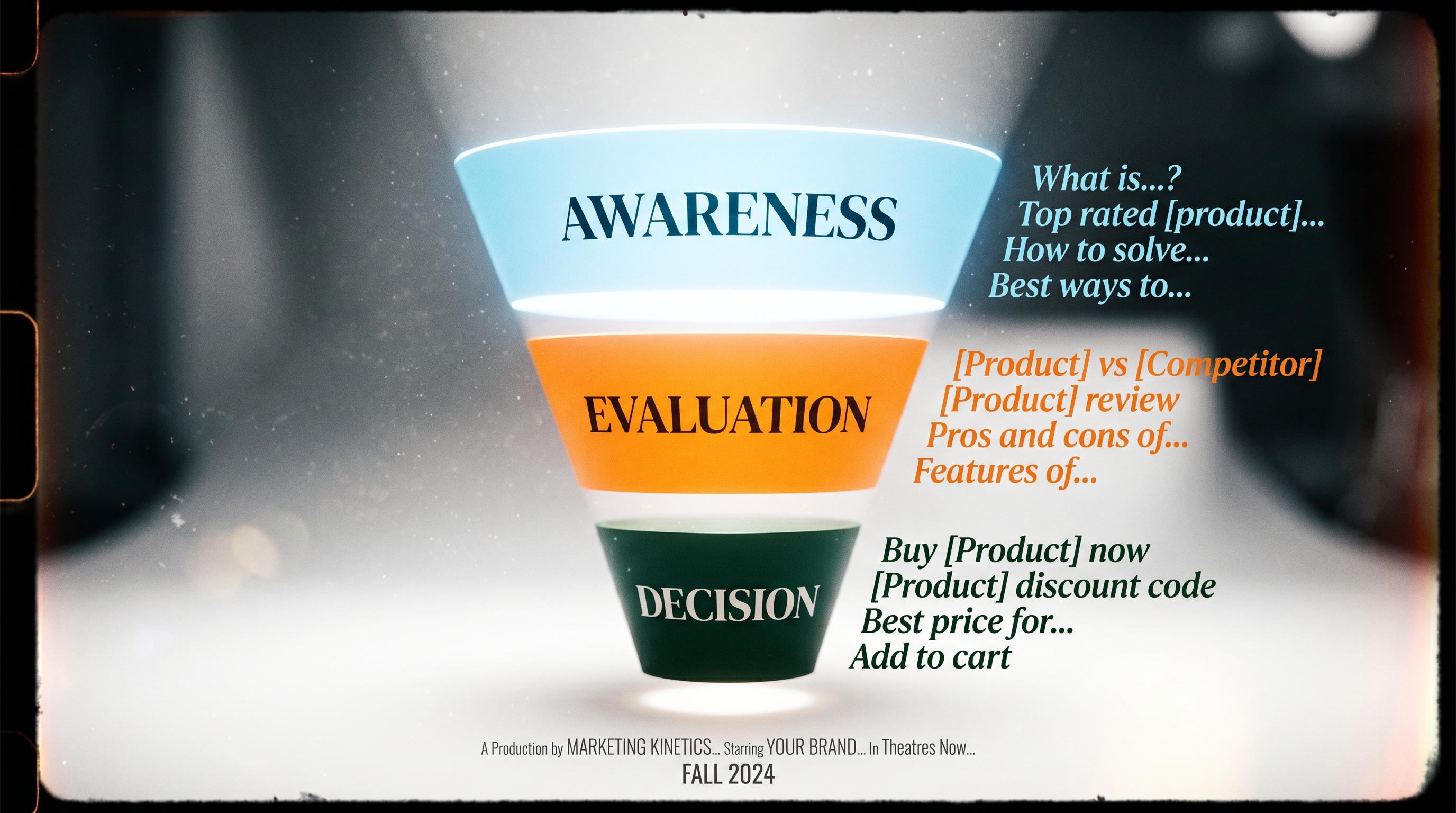
High intent keywords don't exist in isolation. They follow a natural progression that maps to where a buyer is in their decision journey. High intent keywords follow a progression you can map to distinct pages: Problem ("automate content production"), Solution ("AI tool for content briefs"), Evaluation ("SEO platform comparison"), Selection ("SEO platform pricing"), and Action ("SEO platform demo" or "free SEO audit").
The final three stages concentrate the high intent keywords. The first two are more aligned with informational search intent or exploratory commercial search intent.
For SEO strategy, the strongest content mix includes an awareness layer (educational articles, definitions), an evaluation layer (comparisons, alternatives, use-case pages), and a decision layer (service pages, pricing pages, demo pages). If your site is heavy on awareness but thin on decision content, you are likely leaving revenue on the table.
How to Find High Intent Keywords in 2026
Finding these keywords is a skill, and it starts with knowing where to look. There are four reliable methods.
1. Mine Your Google Ads Search Terms Report
If you run paid search, your Google Ads account is the most accurate source of high intent keyword intelligence available to your business. Every keyword in your account has actual conversion data attached to it. You know exactly which queries drove form fills, trial signups, or purchases. Any search term that converted even once is a high intent signal; if it converted multiple times, it is a priority organic target. This method surfaces queries that perform but that you may never think to target organically because they look "too specific" or "too low volume," and those qualifiers are precisely why they work.
2. Use Intent Filters in Ahrefs or Semrush
Ahrefs and Semrush both have intent classification built into their keyword data. Use these filters deliberately rather than browsing by volume. In Ahrefs, use the Keywords Explorer, add your seed terms, and filter Intent to Transactional or Commercial. Set CPC minimum at $1–2 (high CPC is a proxy for commercial value; advertisers only bid on terms that convert). Filter KD under 40 for realistic ranking opportunities.
3. Watch the CPC Signal
The "Top of page bid" metric is a good indicator of buyer intent; keywords with suggested bids over $2–3 usually mean that the person is very likely to take action. Google Keyword Planner's "high commercial intent" filter identifies keywords where advertisers pay premium rates, a clear signal of strong conversion potential. If companies are willing to pay $15 per click, that keyword drives sales.
4. Listen to Your Customers
The most valuable high-intent keywords often come directly from customer conversations. Sales calls, support tickets, and customer reviews contain phrases that keyword tools completely miss. Take 30 minutes each week to scan your support inbox and sales call transcripts. The exact phrases people use when they're ready to buy are pure gold.
When building out a keyword strategy for a small business, this customer-listening approach often uncovers conversion-ready phrases that no tool would suggest because they're too niche to show meaningful volume.
The Right Content Format for Each Intent Type
Finding the keyword is only half the job. The content format needs to match what the searcher expects to find. This is where many businesses lose conversions they should have won.
| Intent Type | Best Content Format | Key Elements |
|---|---|---|
| Commercial Investigation | Comparison guides, review articles, "best of" lists | Comparison table, pros/cons, clear recommendation |
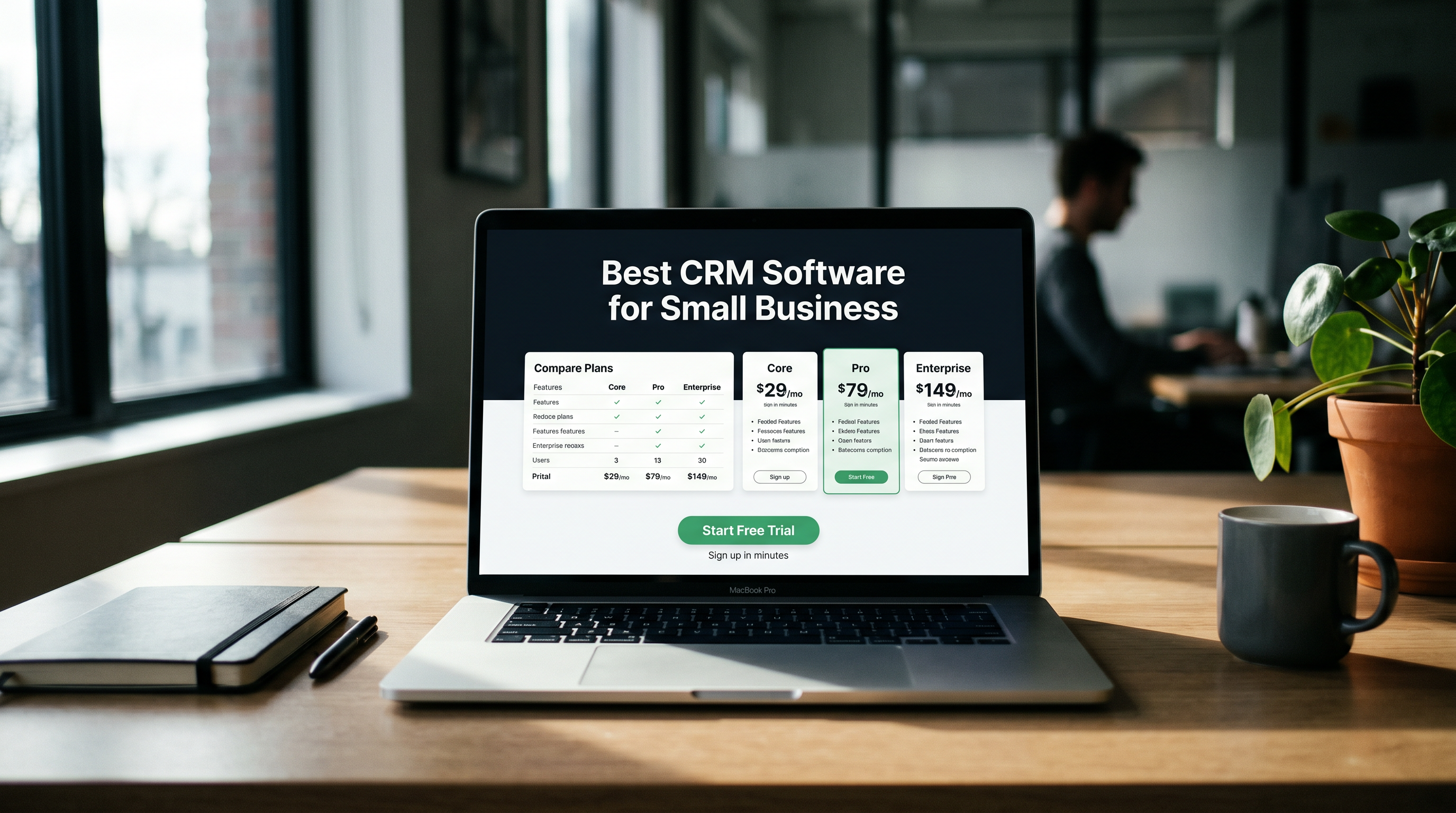
| Transactional | Product pages, landing pages, pricing pages | Clear CTA, pricing info, trust signals |
| Navigational (Branded) | Branded landing pages, case studies | Social proof, testimonials, specific use cases |
| Local High Intent | Local service pages, Google Business Profile | Location, availability, contact options |
A common mistake is using high-intent keywords on blog posts instead of landing pages. If someone searches "buy email marketing software," they expect a product page, not an educational article.
When producing this type of content at scale, AI-powered SEO tools can help structure high-intent pages automatically, matching format to intent across dozens of pages without manual effort for each one.
Common Mistakes When Targeting High Intent Keywords
Even experienced SEOs slip up here. These are the four mistakes worth watching out for.
- Chasing volume over intent. Chasing volume over intent is the most common mistake in high-intent SEO. Many businesses target high-volume keywords that generate traffic but don't convert, rather than focusing on lower-volume terms with clear commercial intent.
- Ignoring long-tail opportunities. "Ignoring long-tail opportunities leaves money on the table because highly specific queries often indicate stronger purchase intent. "Best CRM for real estate agents under $50/month" shows much stronger intent than "CRM software," even though it has lower search volume.
- Wrong page, right keyword. Always align your content format with the keyword's intent. Transactional keywords belong on product or service pages. Commercial investigation keywords belong on comparison blogs or buying guides.
- Keyword stuffing. Cramming high intent keywords into every sentence hurts readability and SEO. One well-placed primary keyword in the title, H1, first paragraph, and meta description is enough.
Measuring Success: The Metrics That Matter
High intent keyword performance shouldn't be measured by traffic alone. Conversion rate by keyword reveals which high-intent terms drive actual business results. Track conversions from demo requests, trial signups, consultation bookings, and direct purchases attributed to specific keyword rankings.
Revenue per visitor from high-intent keywords should exceed general organic traffic. Track the average revenue generated by users who arrive through specific high-intent search terms compared to informational queries. Time to conversion also matters: high-intent keywords should show shorter sales cycles because users arrive further along in their buyer's journey, already educated about solutions and ready to evaluate.
For SaaS companies specifically, prospects who enter through intent-based searches are typically further along in their buyer journey, meaning they require less nurturing and convert at a significantly higher rate. This efficiency is vital in B2B sectors where the sales process is often complex and lengthy. A well-built SaaS SEO strategy treats high-intent keyword coverage as a core revenue driver, not just an organic traffic play.
FAQ: High Intent Keywords
What is the difference between high-intent and low-intent keywords?
The core difference between high and low intent keywords is not volume; it is where the searcher sits in the decision process. Low intent keywords drive awareness and brand reach. High intent keywords drive revenue. A low-intent keyword like "what is accounting software" attracts curious learners. A high-intent version like "accounting software for freelancers pricing" attracts people who are actively evaluating their options to buy.
Do high intent keywords always have low search volume?
Not always, but often. High intent keywords are search queries that indicate the user is ready to take an action such as buying, comparing, subscribing, or contacting a service. They may have lower search volume, but they deliver higher conversions and stronger business results. Some competitive commercial keywords like "best project management software" can have significant search volume AND strong intent. The key is that intent, not volume, should drive your prioritization.
Can I target high intent keywords with blog content?
Yes, with conditions. Blog posts targeting commercial investigation queries like "best CRM software for small business" or "top marketing tools 2026" attract users who are comparing options. These pieces drive traffic from high-intent audiences who are close to making a decision. However, pure transactional queries like "buy X now" belong on product or landing pages, not blog posts. Match the format to the exact intent signal in the query.
How do I know if a keyword has high commercial intent without running ads?
High intent keywords usually have higher CPC in platforms like Google Ads because advertisers fight for them. Use Google Keyword Planner's "Top of page bid" column as a proxy: the higher advertisers are willing to pay per click, the more commercially valuable that keyword is. You can also look at the SERP itself; if you see multiple ads and shopping results, the intent signal is strong.
How does intent-based SEO interact with AI search in 2026?
AI Overviews appear on roughly 80% of informational keywords. Informational keywords are increasingly owned by AI summaries; transactional keywords remain the territory where clicks still happen. AI search systems prioritize comprehensive, structured content that directly answers user questions while providing contextual information that supports decision-making. Optimizing for AI search means creating content that addresses complete user journeys rather than individual keywords.
Rankcow is built specifically for this challenge: automatically identifying high-intent, low-competition keywords and turning them into optimized, published content without the manual grind. With an average 8.4x traffic lift across 1,000+ customer sites, Rankcow handles the full pipeline from keyword discovery to CMS publishing so you can focus on running your business. Start putting the right keywords to work for you today.