10 Best SEO Automation Platform Reviews in 2026 (Tested & Ranked)
If you've tried to keep up with SEO manually in 2026, you already know the problem. Publishing consistently, finding low-competition keywords, optimizing every article, and then tracking rankings across hundreds of pages is simply not a one-person job anymore. Effective SEO automation deploys intelligent software to handle repetitive tasks such as keyword research, technical scans, and content optimization, pulling data directly from your analytics and CMS to create a smooth-running SEO workflow that shifts your team's focus from manual labor to strategic growth. The catch is that "automation" means very different things depending on which platform you're looking at.
We evaluated 10 platforms across three criteria: pricing transparency, ease of use without a technical background, and the depth of automation (do they handle one step or the whole pipeline?). We also measured whether the tool actually saved meaningful time. A tool that saves you five minutes a week is not worth the subscription. We looked for platforms that tackle a real SEO headache. Below is the complete list, ranked by overall value.
Quick-Pick Guide: Best SEO Automation Platform by Use Case
| Use Case | Best Pick | Starting Price |
|---|---|---|
| Full autopilot content pipeline | Rankcow | Flat monthly subscription |
| All-in-one SEO suite | Semrush | $139.95/month |
| Backlink analysis + rank tracking | Ahrefs | $29/month (Starter) |
| Content optimization scoring | Surfer SEO | ~$89/month |
| Agencies on a budget | SE Ranking | $47/month |
| Content decay detection | Clearscope | $189/month |
| Content brief automation | Frase | $19/month |
| Enterprise full-funnel SEO | Search Atlas | Custom |
| Long-tail keyword discovery | LowFruits | $29.99/month |
| Competitor gap intelligence | Serpstat | ~$59/month |
1. Rankcow
This is what we use daily. Rankcow is the only platform on this list that handles the entire SEO content pipeline without requiring you to touch it after setup. If other tools are writing assistants that still need a strategist at the wheel, Rankcow is the autonomous driver. It identifies high-intent, low-competition keywords, writes long-form brand-aligned content, generates images, builds internal links automatically, and publishes directly to your CMS. The result is a genuinely hands-off system, not just a faster version of the manual workflow you already have. Rankcow reports an 8.4x average traffic lift across its customer base and is currently active on 1,000+ customer sites.
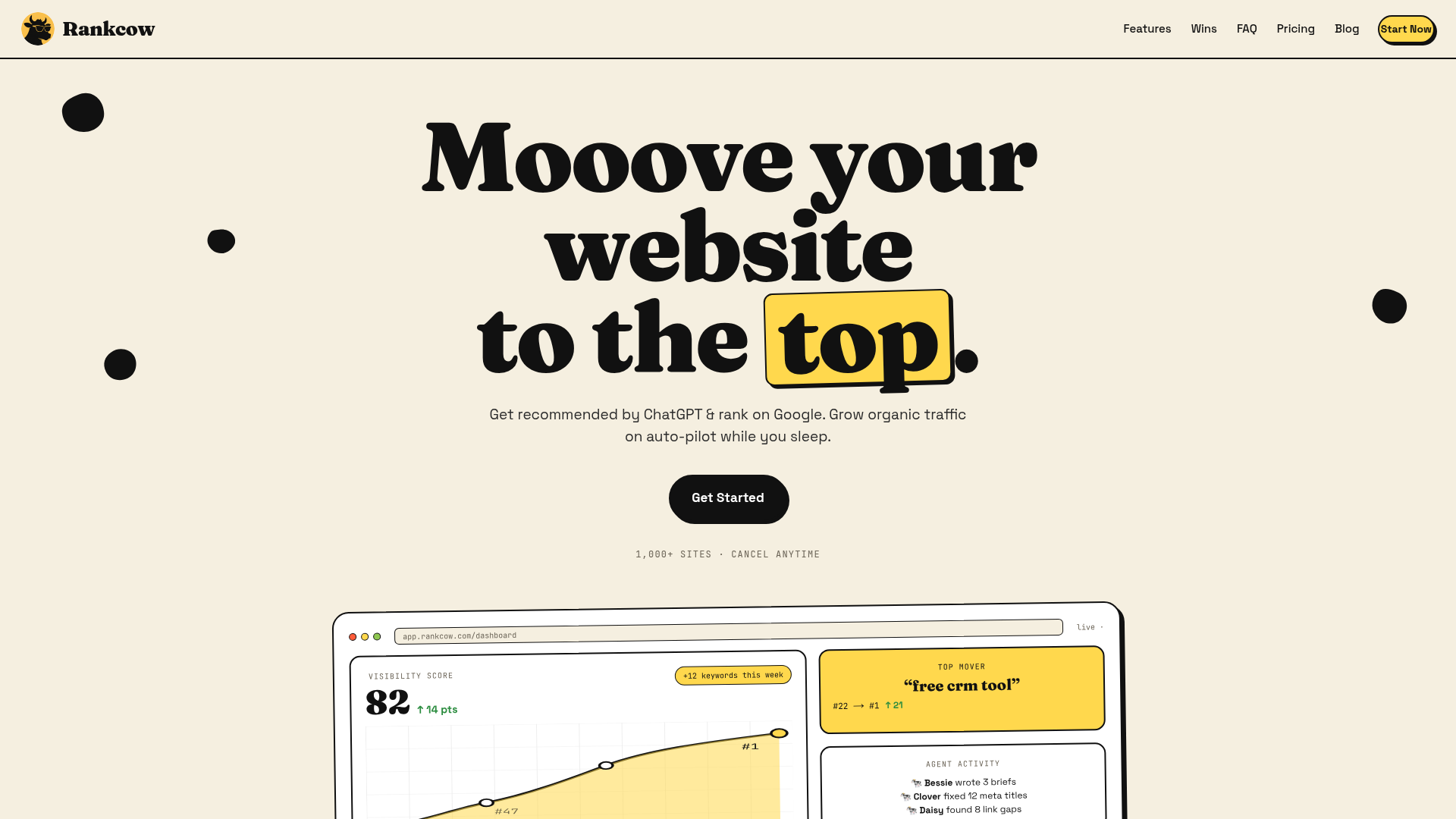
We moved to Rankcow after cycling through Jasper and SurferSEO in combination. The problem wasn't the quality of either tool. It was that someone still had to do the keyword research, write the brief, run it through Surfer, then manually publish. Rankcow removed every one of those steps. The platform supports 150+ languages and connects to WordPress, Webflow, Shopify, Framer, Notion, and custom blogs via webhooks, so CMS compatibility has never been a friction point. Those interested in how AI-powered SEO tools compare across different workflow stages will find Rankcow sits in its own category: it doesn't assist, it executes.
Key Features & Use Cases
- Automated keyword discovery targeting high-intent, low-competition terms
- AI content generation that mimics your brand tone (30 articles/month on standard plan)
- Automatic internal linking to build topical authority across your site
- AI image generation included, no separate tool needed
- Direct CMS publishing via webhooks (WordPress, Webflow, Shopify, Framer, Notion)
- E-E-A-T compliance built into the content pipeline
- Supports 150+ languages for international content strategies
- Cancel-anytime subscription, no annual lock-in required
| Feature Highlights | Best For | Pricing Tiers |
|---|---|---|
| End-to-end autopilot content pipeline | SaaS founders, bloggers, SMB owners with no SEO team | Flat monthly subscription, cancel anytime |
| 30 articles/month with AI images + internal links | Businesses replacing agency retainers | Significantly cheaper than traditional agency cost |
| Universal CMS integration via webhooks | Multi-platform publishers | Included in all plans |
Pros:
- Genuinely zero-touch after initial setup: no writing, no briefing, no publishing
- Flat-rate pricing makes budgeting straightforward with no per-article fees
- Internal linking automation builds topical authority without manual effort
- Brand tone matching means content doesn't read like generic AI output
- 8.4x average traffic lift is a concrete, verifiable benchmark
- Covers 150+ languages, making it viable for international SEO strategies
Website: https://www.rankcow.com/
2. Semrush
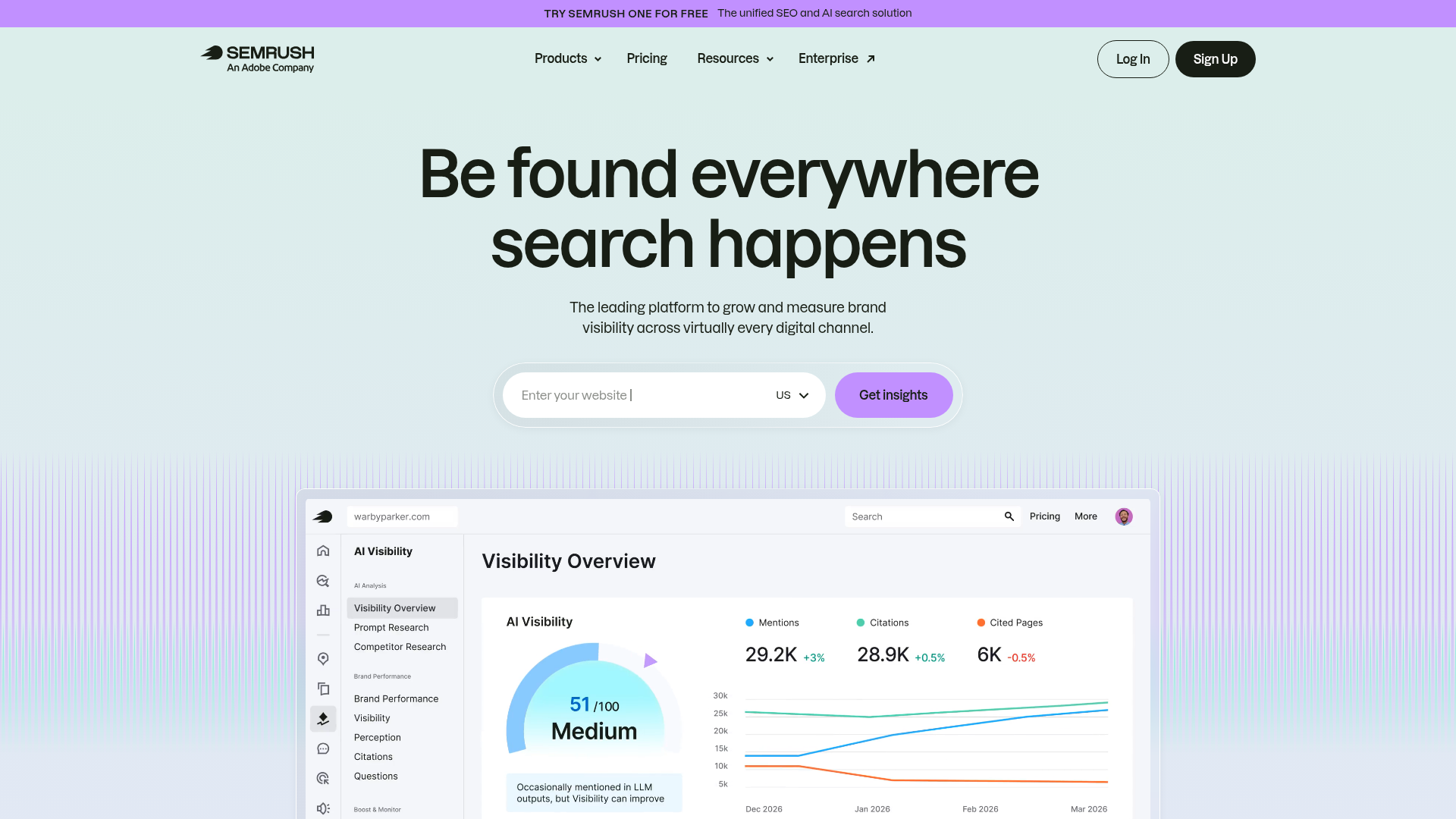
Semrush is the most widely used SEO platform in the world for a reason. Starting as a simple browser extension, Semrush now operates as a complete digital marketing ecosystem, handling everything from keyword research and rank tracking to technical audits and content optimization, with users able to manage campaigns and track brand presence across AI search results from ChatGPT to Google AI Mode. It's the Swiss Army knife of the category. The problem is that it still requires a human operator for strategy, content creation, and publishing. We stopped using it as our primary tool when the weekly hours spent inside the platform outweighed the time it was saving us.
Key Features & Use Cases
- Position Tracking with automated daily rank updates and competitor alerts
- Scheduled Site Audit that crawls and prioritizes technical issues by severity
- Content Marketing Platform with topic cluster generation
- White-label reporting automation for agencies
- Backlink gap analysis and link building tools
| Feature Highlights | Best For | Pricing Tiers |
|---|---|---|
| 43 trillion backlinks tracked, 27.3 billion keywords | In-house SEO teams, agencies | Pro: $139.95/month |
| Competitive intelligence + position tracking | Multi-client agency workflows | Guru: ~$249/month |
| White-label client reporting | Enterprise marketing teams | Business: ~$499/month |
Pros:
- Deepest keyword and backlink database in the market
- Automated competitor monitoring with real-time alerts
- Covers technical SEO, content, and off-page in one subscription
Cons:
- Steep learning curve; not beginner-friendly
- Content still requires human writing and publishing
- Cost escalates significantly for multi-user or multi-project teams
Website: https://www.semrush.com/
3. Ahrefs
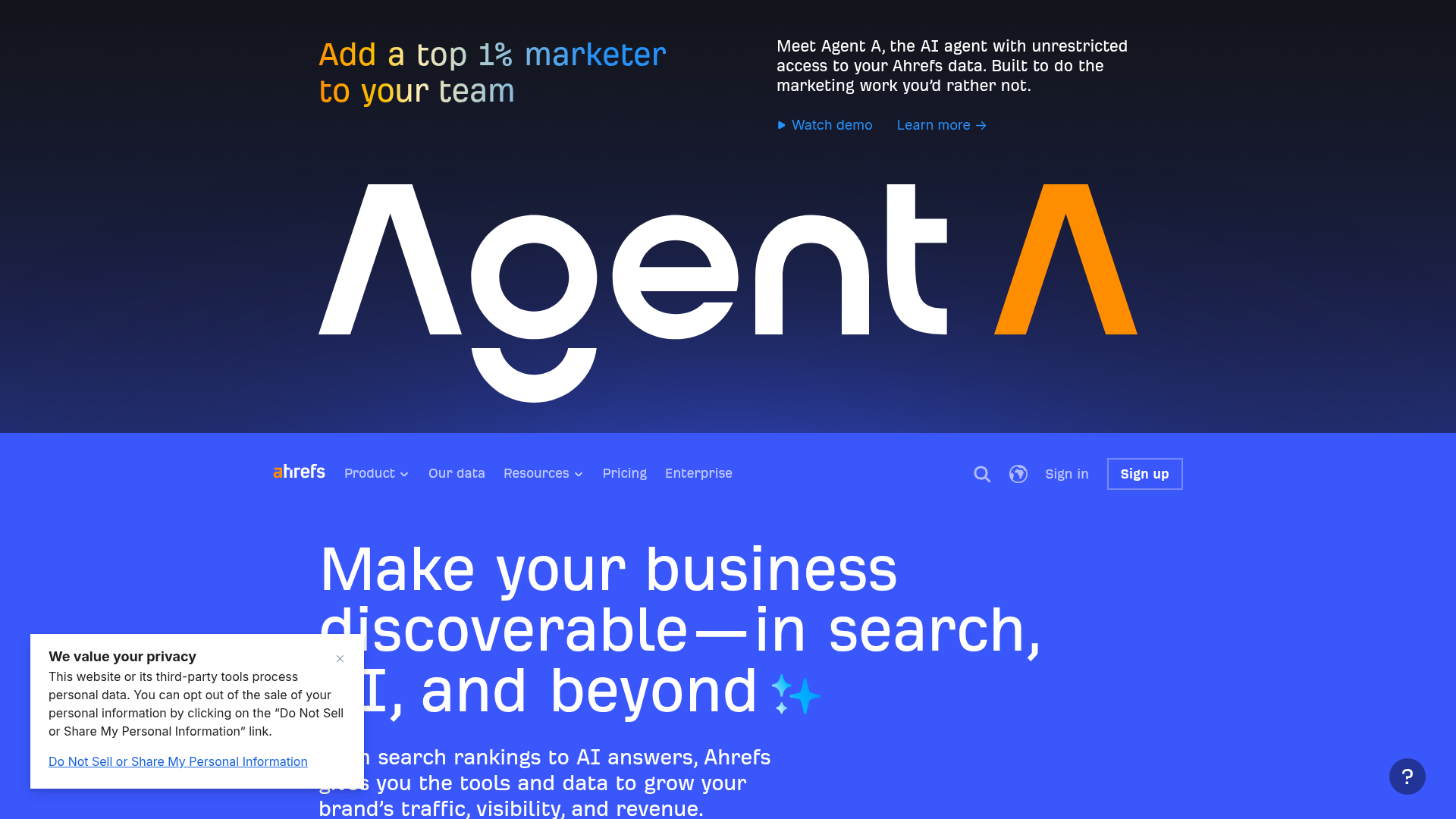
Ahrefs built its reputation on backlink data and has never stopped being the go-to reference for link intelligence. 64% of SEO professionals trust Ahrefs' link data over competitors, while the runner-up only managed 14% of votes, and their massive backlink index helps 44% of Fortune 500 companies succeed. Ahrefs rolled out a budget-friendly Starter plan at $29/month in January 2026, making it available to solopreneurs. Like Semrush, Ahrefs is a research and analysis platform, not a content execution tool, so you're still doing the writing yourself.
Key Features & Use Cases
- Site Explorer for deep backlink and organic traffic analysis
- Keywords Explorer with AI-powered keyword clustering and search intent breakdown
- Rank Tracker with SERP feature monitoring
- Brand Radar for LLM and AI search visibility tracking
- Automated backlink monitoring with alerts for new and lost links
| Feature Highlights | Best For | Pricing Tiers |
|---|---|---|
| Most trusted backlink index in the industry | Link building specialists, competitive researchers | Starter: $29/month |
| AI keyword clustering + intent analysis | Content strategists planning topic clusters | Essential: $89/month |
| 40+ language keyword translation | International SEO teams | Advanced/Max: Custom |
Pros:
- Backlink data is the gold standard; no competitor comes close in accuracy
- Starter plan at $29/month is genuinely accessible for solo operators
- Multilingual keyword support across 40+ languages
Cons:
- No content generation; it researches but doesn't write or publish
- Crawl limits on lower tiers can be frustrating for large sites
- AI-powered features are still maturing compared to specialized tools
Website: https://ahrefs.com/
4. Surfer SEO
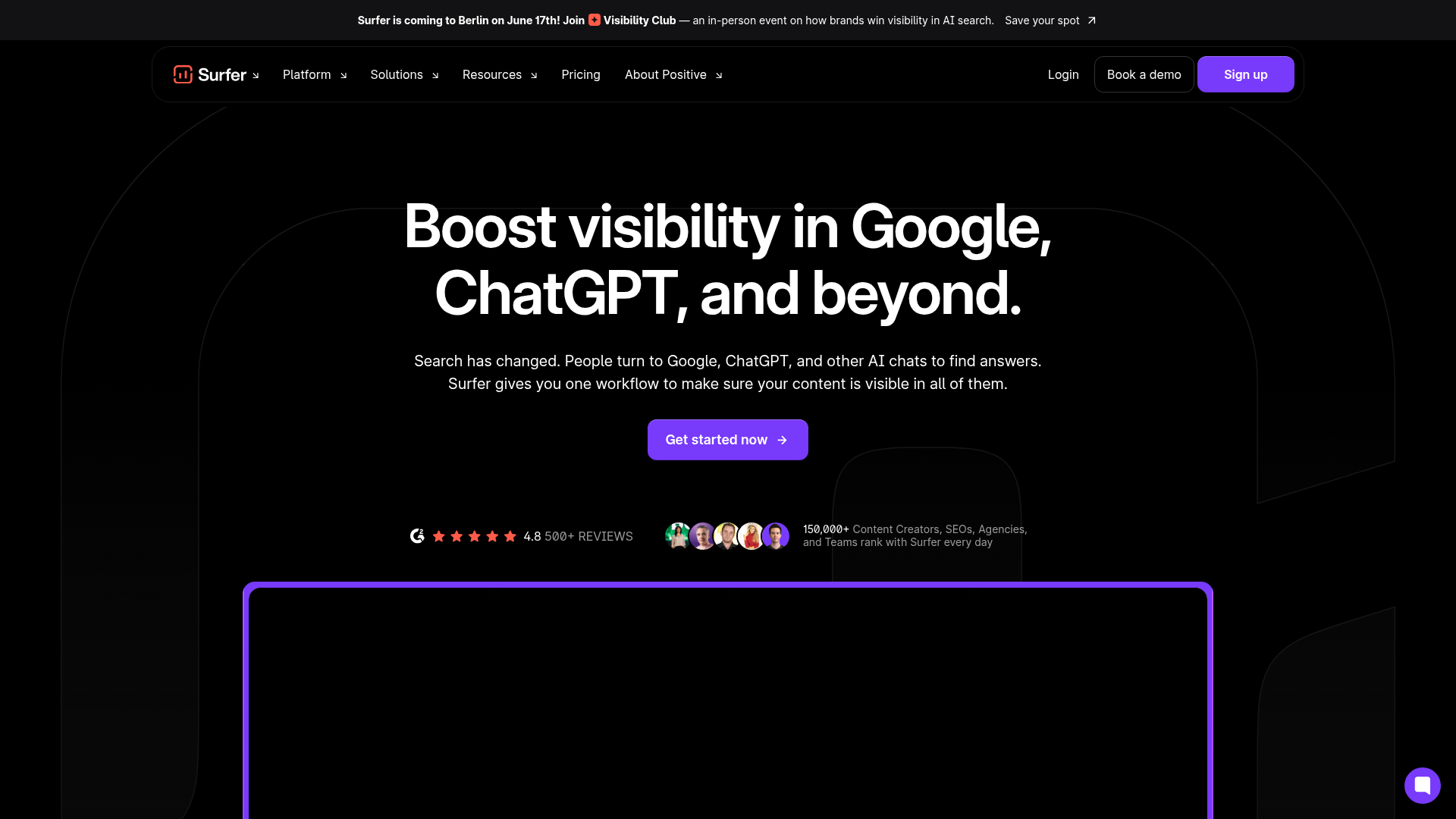
Surfer SEO sits squarely in the content optimization category. Where tools like Ahrefs and Semrush tell you what to write about, Surfer tells you how to write it, scoring your content against top-ranking competitors in real time. Surfer SEO delivers strong value at the sub-$100 price point, focusing on content optimization automation. The weakness is structural: Surfer optimizes what you write but doesn't do the writing. You're still committing hours to production.
Key Features & Use Cases
- Content Editor with real-time keyword density and NLP scoring
- SERP Analyzer comparing top-ranking pages by 500+ on-page signals
- Content Planner for topic cluster mapping
- Surfer AI for draft generation (requires human editing)
- Google Docs and WordPress integrations
| Feature Highlights | Best For | Pricing Tiers |
|---|---|---|
| Real-time content scoring vs. SERP competitors | Content writers optimizing existing drafts | Essential: ~$89/month |
| NLP-based keyword recommendations | In-house content teams | Scale: ~$129/month |
| Topic cluster planning | Content strategists building authority | Enterprise: Custom |
Pros:
- Best-in-class on-page scoring against live SERP data
- Tight Google Docs integration makes it easy to use during writing
- Content Planner creates a ready-made editorial calendar from a single seed keyword
Cons:
- No automation of the actual writing or publishing steps
- Surfer AI outputs still require significant human editing to meet quality standards
- Price per article credits adds up fast for high-volume publishers
Website: https://surferseo.com/
5. SE Ranking
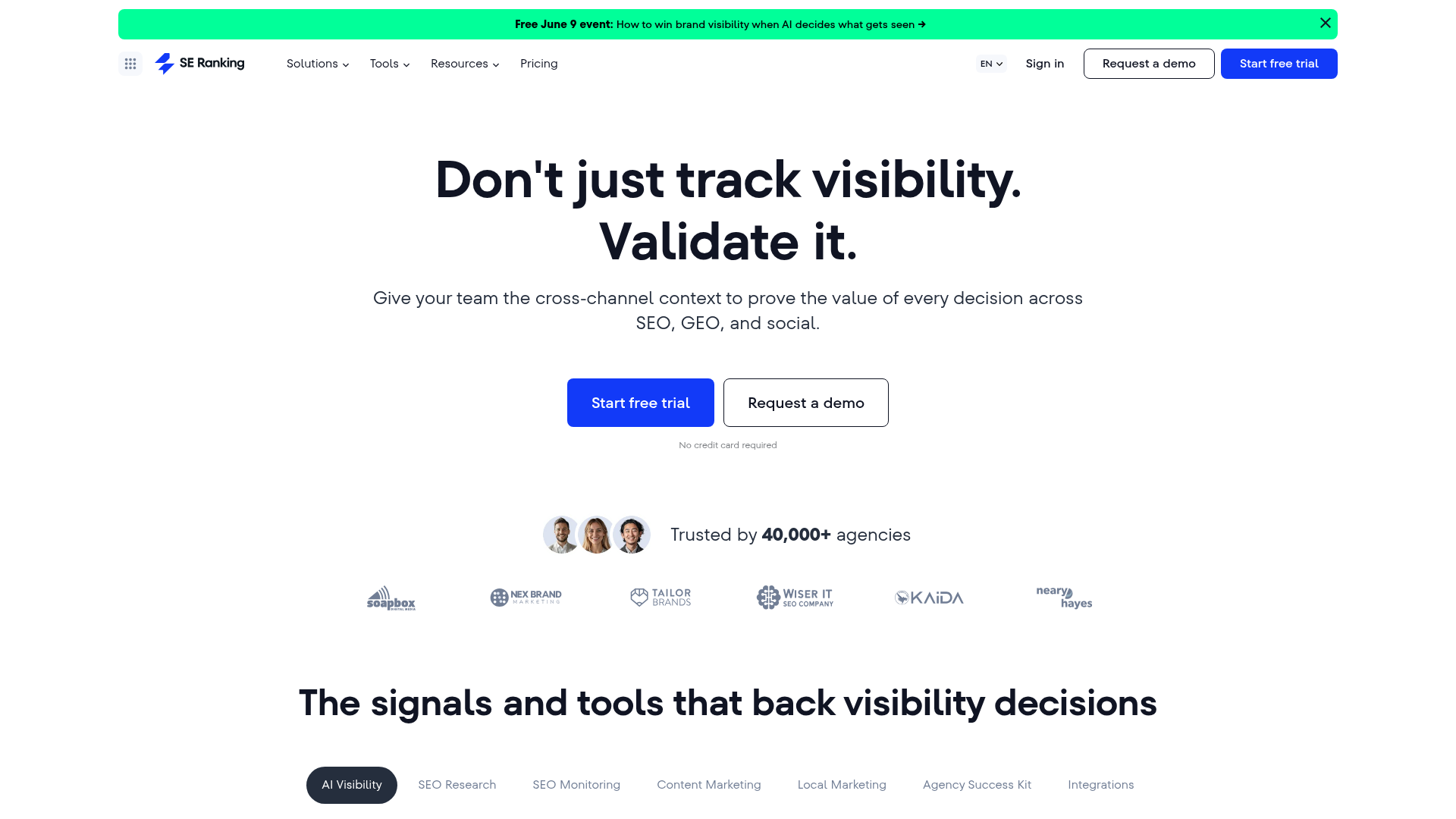
SE Ranking is the best value proposition in the mid-market. SE Ranking delivers all-in-one SEO automation at price points that undercut most competitors while maintaining feature depth, automating the full spectrum of SEO tasks including daily rank tracking across unlimited keywords on higher tiers, while scheduled site audits run in the background identifying technical issues. For agencies with multiple client accounts, the white-label reporting automation alone justifies the subscription. The platform doesn't match Semrush or Ahrefs on data depth, but it covers 80% of what most small teams actually need.
Key Features & Use Cases
- Flexible rank tracking with daily, 3-day, or weekly update frequency options
- Automated site audits with email alerts for critical issues
- Competitor monitoring across up to 20 rivals simultaneously
- White-label reporting with scheduled automated client delivery
- Keyword gap and backlink analysis tools
| Feature Highlights | Best For | Pricing Tiers |
|---|---|---|
| Flexible rank tracking frequency pricing | Budget-conscious agencies | Essential: $47/month |
| White-label client reports on schedule | Freelancers, small agencies | Pro: ~$95/month |
| Competitor monitoring for 20 rivals | Competitive niches | Business: ~$239/month |
Pros:
- Pricing scales with actual usage, not arbitrary seat counts
- White-label reporting is one of the best implementations in this price range
- Covers rank tracking, audits, and competitor research without add-ons
Cons:
- Backlink database isn't as deep as Ahrefs or Semrush
- No content generation capabilities
- UI can feel cluttered when managing large numbers of projects
Website: https://seranking.com/
6. Clearscope
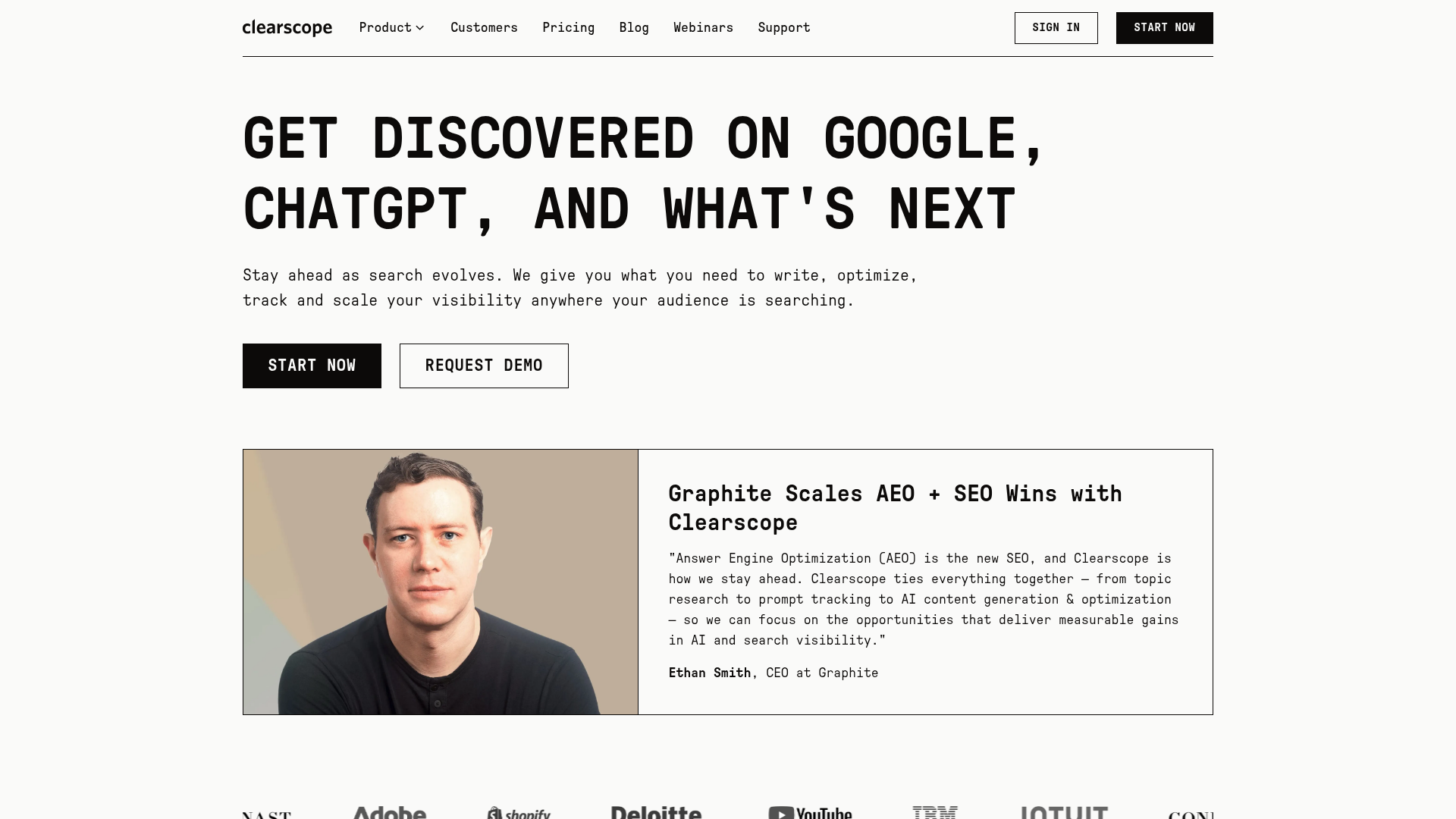
Clearscope is the premium choice for content teams who publish frequently and need to keep existing articles performing. While you can do this in Google Search Console by comparing previous date ranges, Clearscope automates the entire process and tells you exactly which pages are decaying and need your attention. The content inventory feature is where it earns its $189/month entry price. We stopped using Clearscope as our primary tool when we realized we were spending more time fixing old content than producing new content that could compound over time.
Key Features & Use Cases
- Content inventory with automated decay detection
- Real-time content grading based on semantic keyword coverage
- Google Docs and WordPress integrations
- SERP analysis showing competitor content structure and term usage
- Automated reports on content performance trends
| Feature Highlights | Best For | Pricing Tiers |
|---|---|---|
| Automated content decay alerts | Content teams managing 100+ articles | Essential: $189/month |
| Semantic keyword grading | Writers and editors optimizing drafts | Business: $399/month |
| Large-scale content inventory | Enterprise content operations | Enterprise: Custom |
Pros:
- Content decay detection is genuinely useful for mature sites with large archives
- Grading system is simple enough for non-technical writers to use independently
- Integrates cleanly with Google Docs, reducing workflow disruption
Cons:
- $189/month entry price is steep for small teams or solo bloggers
- No keyword research, rank tracking, or publishing automation
- Best suited as a supplementary tool, not a standalone SEO platform
Website: https://www.clearscope.io/
7. Frase
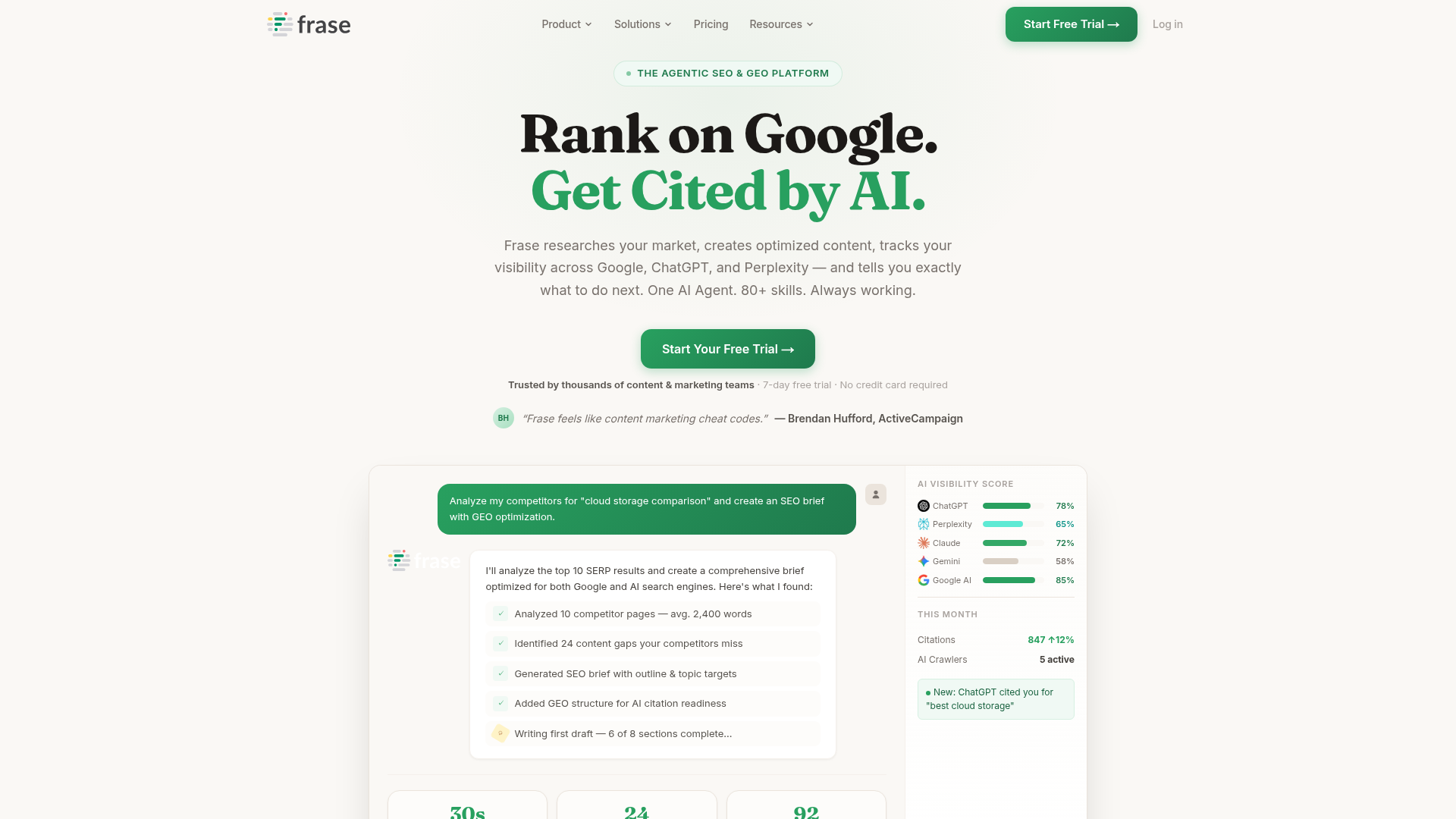
Frase focuses on accelerating the research and briefing phase of content creation. Content briefs used to take hours to create; Frase automates SEO content research in minutes, analyzing what's already ranking and showing you exactly how to create something better. It's a strong tool for content teams that still want human writers involved but need to cut brief production time dramatically. The limitation is that it stops at the brief. You still need a writer, an editor, and a publishing workflow after Frase does its job.
Key Features & Use Cases
- Automated SERP analysis and content brief generation
- AI writing assistant for draft creation from briefs
- Topic scoring and question research (People Also Ask integration)
- Content optimization editor with competitor comparison
- Team collaboration tools for editorial workflows
| Feature Highlights | Best For | Pricing Tiers |
|---|---|---|
| Automated SERP-based content briefs | Content managers briefing freelance writers | Solo: $19/month |
| AI writing from brief to draft | Small editorial teams | Basic: $44/month |
| Team collaboration on content projects | Growing content operations | Team: $114/month |
Pros:
- $19/month entry point makes it accessible for solo content creators
- Brief quality is genuinely high and well-structured for writers
- People Also Ask integration surfaces question-based content angles automatically
Cons:
- AI draft quality still requires substantial human editing
- No rank tracking, backlink analysis, or technical SEO features
- Publishing must be handled separately; no CMS integration for auto-posting
Website: https://www.frase.io/
8. Search Atlas
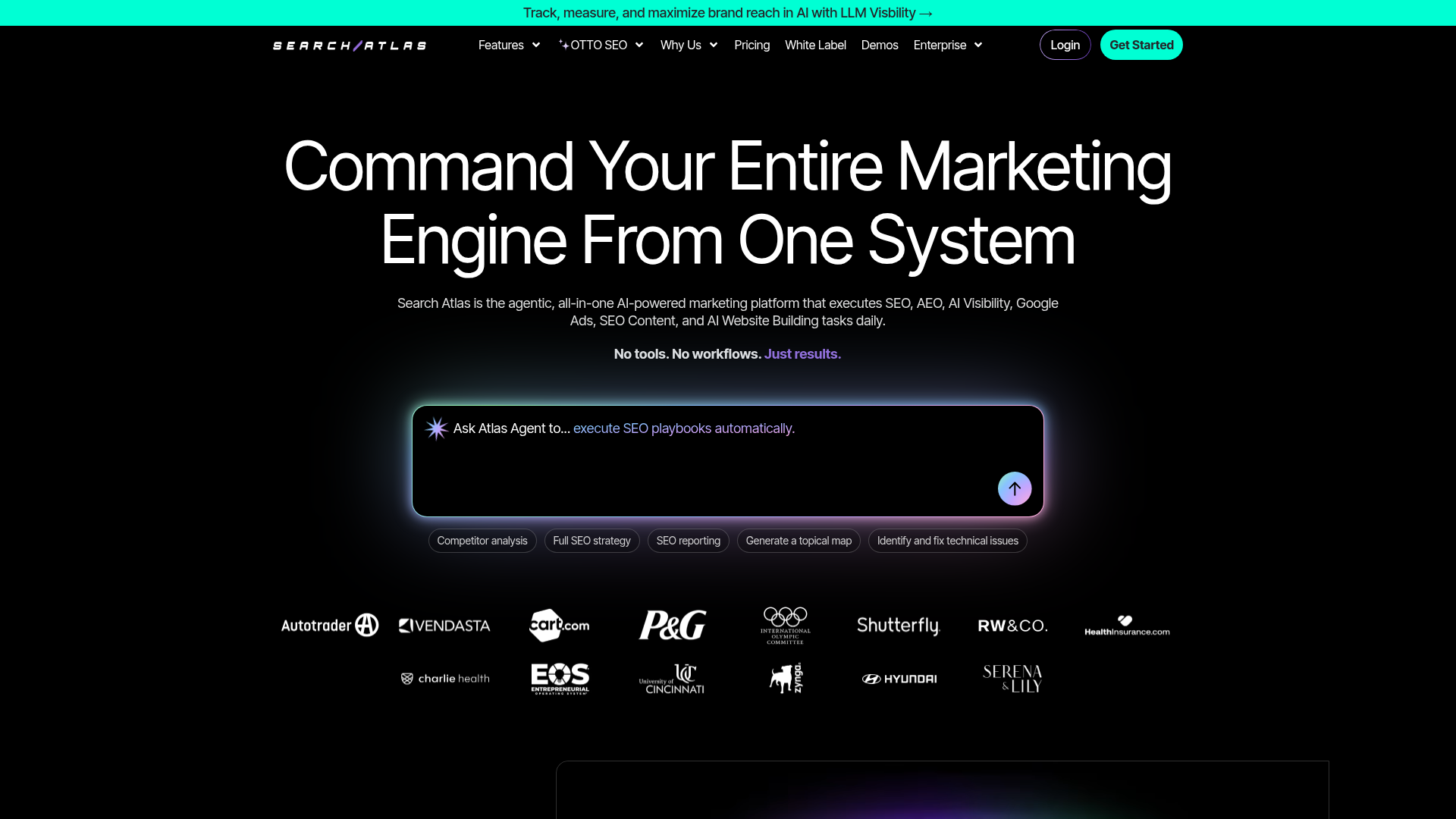
Search Atlas is the most complete enterprise-grade automation platform on this list. Search Atlas is an AI-powered, all-in-one digital marketing platform built to centralize, automate, and optimize digital marketing workflows; its Atlas Agent is the AI reasoning layer powering cross-tool recommendations and automated task sequencing, while LLM Visibility tracks brand appearance across AI-powered answer engines like ChatGPT, Perplexity, and Google AI Overviews. For large teams, the combination of AI-generated content, technical auditing, and LLM visibility tracking in one platform is compelling. The price and complexity make it overkill for most SMBs, though.
Key Features & Use Cases
- Atlas Agent AI for automated cross-tool strategy and task sequencing
- LLM Presence Tracking across ChatGPT, Perplexity, and Google AI Overviews
- Website Studio AI-powered page builder
- White-labeled client reporting with live metrics from GSC and GA4
- Full technical SEO audit suite with competitive intelligence
| Feature Highlights | Best For | Pricing Tiers |
|---|---|---|
| AI agent for autonomous SEO task sequencing | Enterprise SEO teams | Starter plans available |
| LLM visibility tracking across AI search engines | Brands concerned with AI search citations | Mid-tier and custom plans |
| Full-funnel from audit to publishing to reporting | Large agencies managing many clients | Enterprise: Custom pricing |
Pros:
- LLM visibility tracking is a genuine differentiator in 2026
- Atlas Agent reduces time spent on manual strategy decisions
- White-label reporting is polished and client-ready
Cons:
- Complex onboarding; not suited for teams without SEO experience
- Pricing is opaque and requires a sales call for most enterprise tiers
- Feature depth can be overwhelming; many teams will use only 30–40% of what's available
Website: https://searchatlas.com/
9. LowFruits
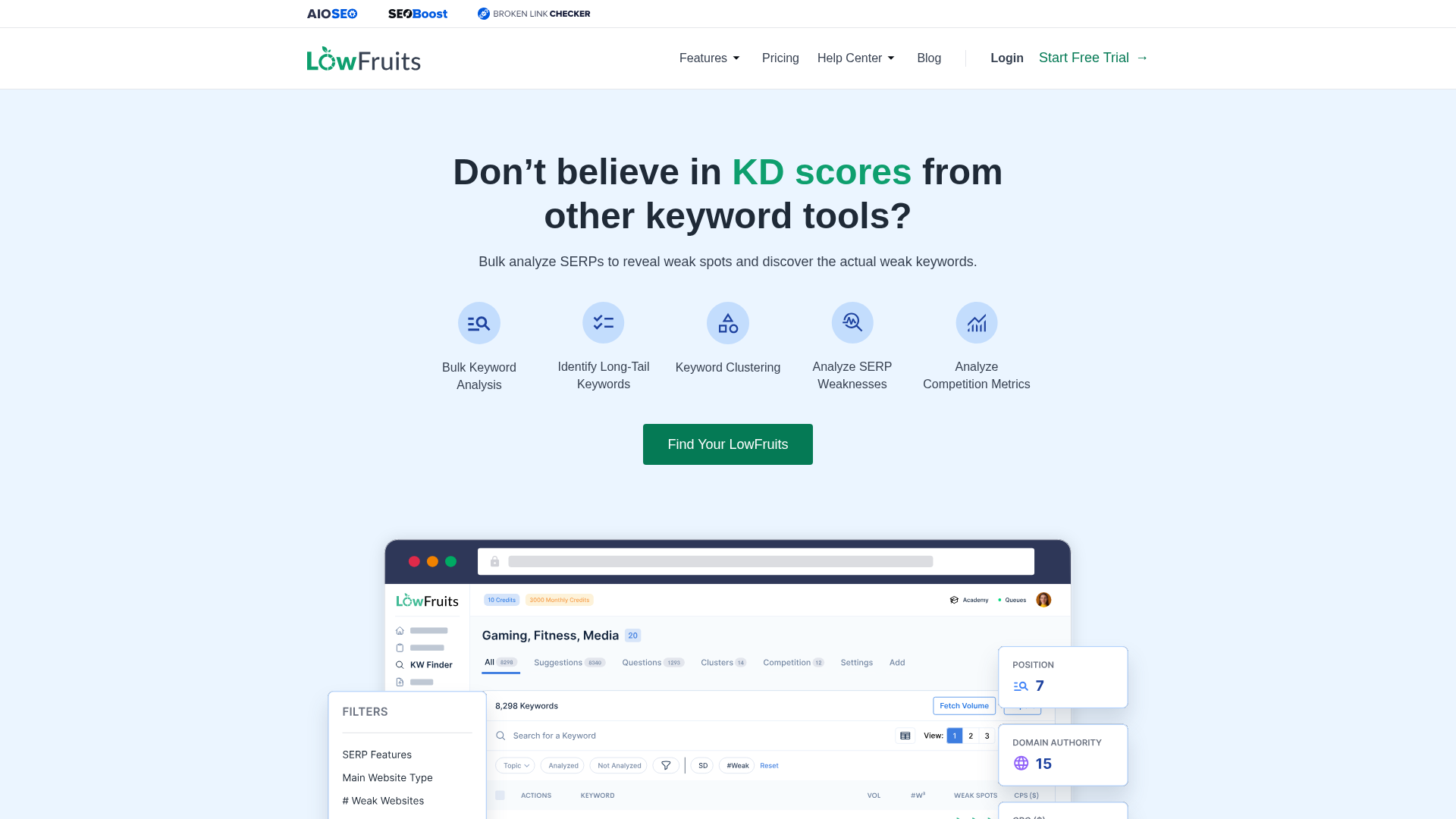
LowFruits does one thing and does it well: finding keywords where the competition is weak. At its core, LowFruits is a keyword research tool that helps you automate SERP analysis of your competitors, uncovering weaknesses or content gaps, and helping you find hidden gem keywords to target; you can also import a set of keywords you already have and automate the clustering and topic creation part of your SEO strategy. For small businesses trying to build organic traffic without a massive domain authority, targeting winnable keywords is often the most important strategic move. Solid tool for small business keyword research, but it ends after discovery. You still need a way to execute on the keywords it finds.
Key Features & Use Cases
- Automated SERP weakness detection (highlights low-authority pages ranking)
- Keyword clustering and topic group automation
- Bulk import and analysis of existing keyword lists
- Competitor content gap identification
- Credit-based pricing for pay-as-you-go flexibility
| Feature Highlights | Best For | Pricing Tiers |
|---|---|---|
| SERP weakness spotting for low-competition wins | New sites, small blogs | Standard: $29.99/month |
| Automated keyword clustering from imports | Content strategists organizing large keyword sets | Premium: $79.99/month |
| 100% money-back guarantee | Risk-averse buyers testing new tools | Both tiers covered |
Pros:
- Genuinely surfaces keywords that other tools miss or undervalue
- Credit-based model means you only pay for what you actually run
- 100% money-back guarantee removes the risk from trying it
Cons:
- Keyword research only; no content, no rank tracking, no technical SEO
- Credits expire and can run out faster than expected on large projects
- No CMS integration or publishing features
Website: https://www.lowfruits.io/
10. Serpstat
Serpstat positions itself as an affordable all-in-one alternative to Semrush and Ahrefs. Serpstat places emphasis on competitor intelligence and automated workflow features, with its keyword gap analysis revealing opportunities rivals are capturing that you're missing; this automated comparison helps prioritize content creation based on actual competitive gaps, and its API access enables custom integrations with existing marketing stacks, letting technical teams build automated workflows that pull SEO data into dashboards or trigger actions based on ranking changes. It covers the basics well. For teams that need a solid mid-tier research platform without the Semrush price tag, it's a reasonable pick.
Key Features & Use Cases
- Keyword gap analysis vs. competitors with difficulty scoring
- Automated scheduled site audits with email alerts
- Rank tracking and SERP monitoring
- API access for custom dashboard integrations
- Backlink analysis and link-building research
| Feature Highlights | Best For | Pricing Tiers |
|---|---|---|
| Competitor keyword gap analysis automation | Brands in competitive niches | Individual: ~$59/month |
| API for custom SEO workflow integrations | Technical teams building internal tools | Team: ~$119/month |
| Site audit + rank tracking bundle | Small agency accounts | Agency: ~$239/month |
Pros:
- Good balance of features relative to price
- API access is available on lower tiers than most competitors
- Competitor gap analysis is one of the more actionable implementations in this range
Cons:
- Data accuracy lags behind Ahrefs and Semrush in backlink reporting
- No AI content generation or automated publishing
- UI hasn't kept pace with more modern platforms in terms of usability
Website: https://serpstat.com/
Master Comparison Table
| Platform | Content Automation | Auto-Publish to CMS | Rank Tracking | Technical SEO | Starting Price | Best For |
|---|---|---|---|---|---|---|
| Rankcow | ✅ Full pipeline | ✅ Yes | ✅ Yes | ✅ Yes | Flat monthly | Hands-off SEO autopilot |
| Semrush | ⚠️ Partial (assist) | ❌ No | ✅ Yes | ✅ Yes | $139.95/mo | All-in-one research suite |
| Ahrefs | ❌ No | ❌ No | ✅ Yes | ✅ Yes | $29/mo | Backlink + keyword research |
| Surfer SEO | ⚠️ Partial (optimize) | ❌ No | ❌ No | ❌ No | ~$89/mo | On-page optimization scoring |
| SE Ranking | ❌ No | ❌ No | ✅ Yes | ✅ Yes | $47/mo | Budget agency platform |
| Clearscope | ⚠️ Partial (grade) | ❌ No | ❌ No | ❌ No | $189/mo | Content decay & optimization |
| Frase | ⚠️ Partial (brief/draft) | ❌ No | ❌ No | ❌ No | $19/mo | Content brief automation |
| Search Atlas | ✅ Yes | ⚠️ Partial | ✅ Yes | ✅ Yes | Custom | Enterprise full-funnel SEO |
| LowFruits | ❌ No | ❌ No | ❌ No | ❌ No | $29.99/mo | Long-tail keyword discovery |
| Serpstat | ❌ No | ❌ No | ✅ Yes | ✅ Yes | ~$59/mo | Competitor gap analysis |
How to Choose the Right SEO Automation Platform
The right framework here starts with one question: where does your SEO process actually break down? Most teams don't fail at strategy. They fail at execution. They know what they should publish but don't have the time or resources to do it consistently. Start by identifying your biggest bottleneck, whether it's content, technical SEO, or reporting, look for a tool that solves that specific problem well, and consider ease of use, integrations with your existing tools, and whether the price justifies the time you'll save.
Use this three-step framework before choosing:
- Map your bottleneck. Is it keyword research, content production, technical fixes, or reporting? A tool that automates the wrong step saves nothing. LowFruits solves keyword discovery. Clearscope solves content optimization. Rankcow solves the entire publishing pipeline.
- Check the output, not just the feature list. One often-overlooked factor is how well the tool automates tasks you actually do versus tasks you theoretically should do. A platform with extensive automation features you'll never use is less valuable than a focused tool that automates your daily workflow perfectly.
- Factor in the real cost. If the cost of an SEO automation tool on a monthly basis is less than the cost it would take for a human to complete that task based on an hourly rate, then yes, it is worth it. If an SEO task is something that can be easily taught and understood by anyone, it can probably be automated with an AI marketing tool. If you're spending 20+ hours a month on SEO content and publishing, the math on a flat-rate automation platform like Rankcow will almost certainly work in your favor.
For teams that need to cover everything from technical audits to competitive research, Semrush or SE Ranking are the right starting points. For teams whose primary constraint is content volume and consistency, the platform you want is one that handles automated internal linking alongside content creation and publishing, so each new article strengthens your entire site rather than sitting in isolation. That's where Rankcow separates from every other tool on this list.
Rankcow takes the entire SEO content workflow off your plate: from keyword discovery to writing, image generation, internal linking, and direct CMS publishing, all on autopilot. If your organic growth is stalling because consistent content production is too resource-intensive to maintain manually, Rankcow's flat-rate subscription delivers 30 fully optimized articles per month without requiring a single hour of your time. Start your Rankcow subscription today and see why 1,000+ sites are averaging an 8.4x traffic lift.