Search Engine Optimization in Digital Marketing: A Complete Beginner-to-Advanced Guide
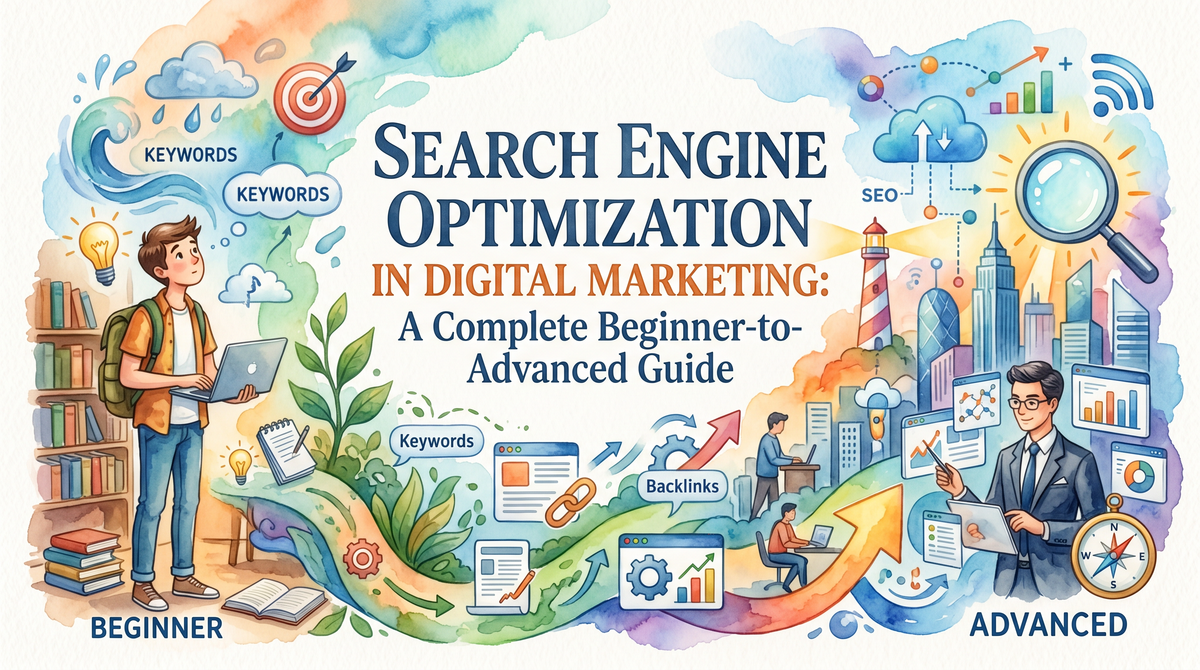
Search engine optimization (SEO) in digital marketing is the practice of improving a website's visibility in unpaid ("organic") search results so more of the right people find it. It covers everything from how you write content and structure pages to how fast your site loads and how many other websites link to it. In short: SEO is how you get Google, Bing, and other search engines to trust your site enough to show it to people who are actively looking for what you offer.
This confused me too, at first. When I started learning digital marketing, SEO felt like a mysterious black box where you stuffed keywords into a page and hoped Google noticed. The reality is far more logical — and far more interesting. Think of it like setting up a library. Google is the librarian. Your job is to write clearly labeled, well-organized, genuinely useful books so the librarian can confidently hand them to the right reader at exactly the right moment.

Why SEO Matters in Digital Marketing
The numbers make a compelling case. Organic search generates approximately 53% of website traffic globally. Compare that to social media, which drives only around 5% of site traffic, and the priority becomes clear. 61% of B2B marketers state that SEO and organic traffic generate more leads than any other marketing initiative.
And the channel is growing, not shrinking. The SEO services market is valued at approximately $83.9 billion in 2026, with industry forecasts suggesting it could reach $148 billion by 2031. Businesses are allocating bigger budgets to search precisely because the returns are durable. SEO delivers stronger long-term ROI at 8x versus 4x for PPC.
The brief version: paid ads stop the moment you stop paying. Organic rankings, built through good SEO, keep sending traffic for months or years after the initial investment.
The Four Pillars of SEO
SEO is easiest to understand when broken into four interconnected areas. Each one matters — ignoring any single pillar puts a ceiling on how well you can rank.
| Pillar | What It Covers | Common Tools |
|---|---|---|
| Keyword Research | Finding the exact phrases people type into search engines | Google Search Console, keyword planners |
| On-Page SEO | Optimizing titles, headings, content, and internal links | Content editors, beginner SEO tools |
| Technical SEO | Site speed, mobile-friendliness, structured data, crawlability | Google Search Console, PageSpeed Insights |
| Off-Page SEO | Backlinks, brand mentions, authority signals from other sites | Link analysis platforms |
Pillar 1: Keyword Research
Keywords are the bridge between what people search for and what your content provides. Think of them like the index cards in that library analogy — they tell the librarian exactly what each book is about. The goal is not to find the most popular keywords, but the most relevant ones with manageable competition.
Beginners often chase high-volume, single-word terms like "marketing" or "shoes." These are brutally competitive. A smarter approach targets long-tail keywords — specific, multi-word phrases like "best running shoes for flat feet." These attract fewer searches, but the people who type them know exactly what they want. Longer keywords attract more clicks: search terms that are 10–15 words long receive 1.76 times more clicks than single-word queries.
Pillar 2: On-Page SEO
On-page SEO is everything you control directly on your webpage. This includes:
- Title tags — the clickable headline that appears in search results
- Meta descriptions — the short summary under the title
- Heading structure (H1, H2, H3) — tells search engines how your content is organized
- Keyword placement — naturally weaving your target term into the content
- Internal linking — connecting related pages on your own site
One often-overlooked on-page element is structured data (also called schema markup). Pages enriched with structured data earn roughly 25% more clicks than pages that lack this optimization. It helps search engines understand your content well enough to display it as a rich result (star ratings, FAQ dropdowns, product prices) right in the search results.

Pillar 3: Technical SEO
This is where SEO starts feeling like IT. Technical SEO covers the infrastructure your content sits on. If Google's bot cannot crawl your pages efficiently, your best-written content will never rank. Key areas:
- Page speed — slow pages lose rankings and visitors
- Mobile-friendliness — Google indexes the mobile version of your site first
- Core Web Vitals — Google's set of page experience metrics (loading, interactivity, visual stability)
- HTTPS — a basic trust and security signal
- XML sitemaps and robots.txt — help search engines understand what to crawl
The stakes are real. Only 48% of mobile websites achieved a "Good" Core Web Vitals score in 2025, meaning well over half of sites are missing out on ranking potential due to technical performance issues alone.
Pillar 4: Off-Page SEO (Backlinks)
Think of backlinks — links from other websites pointing to yours — as votes of confidence. If a respected news outlet links to your article, Google treats that as a signal that your content is trustworthy. Backlinks continue to play a major role in search rankings, and pages ranking first often have significantly more backlinks than lower-ranking pages.
Quality beats quantity here. One link from a well-regarded industry site outweighs hundreds of links from low-authority blogs. Building backlinks honestly — through genuinely useful content, original research, and relationships with other publishers — is the only sustainable strategy.
How to Build Topical Authority (The Advanced Layer)
Once you understand the four pillars, the next level is topical authority. This is the idea that Google rewards websites that cover a subject deeply and completely, not just sites that publish one good article about a topic.
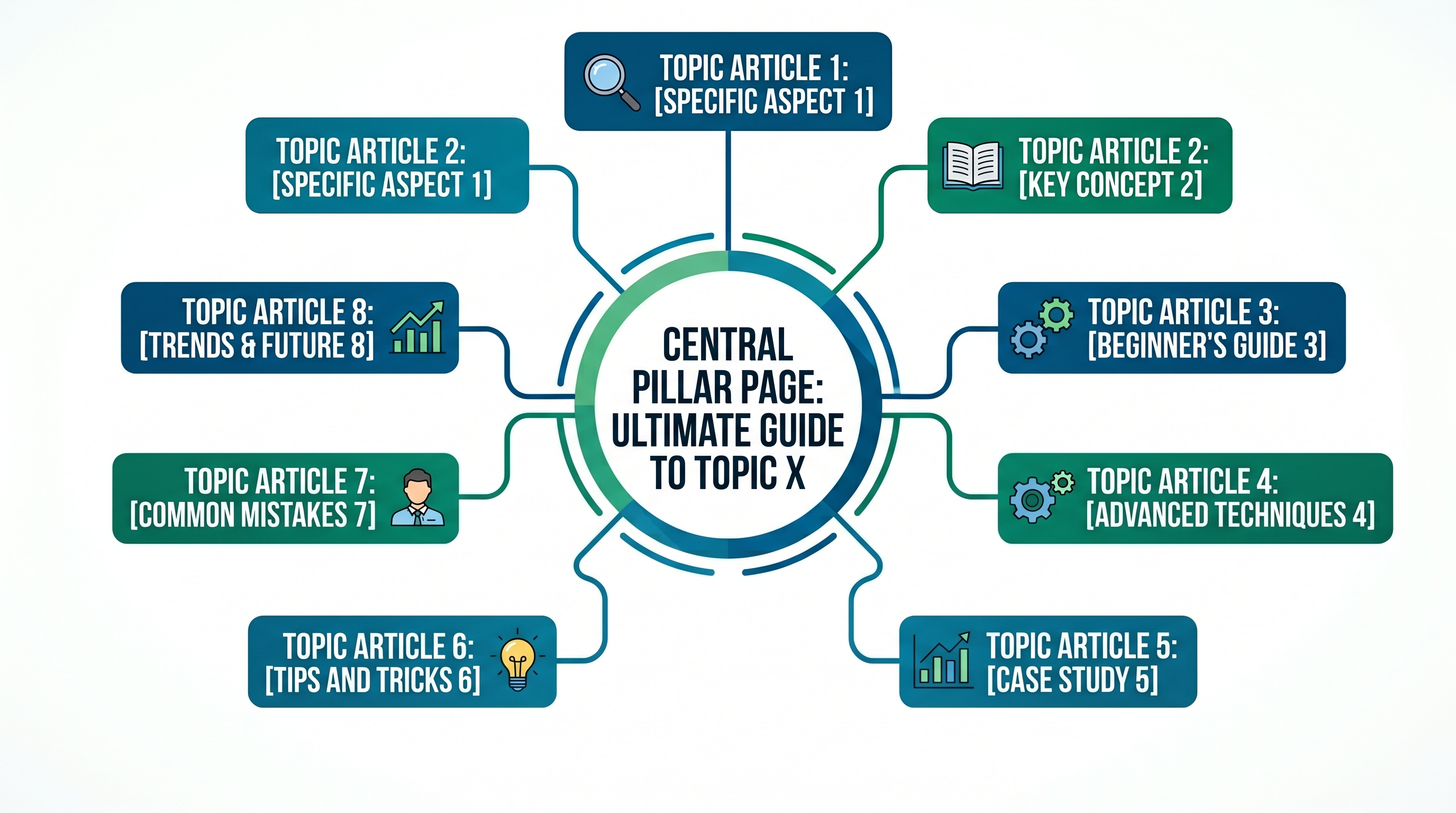
The model works like this: create one central "pillar page" that covers a broad topic, then link it to a cluster of more specific articles. Sites that cover a topic comprehensively, with multiple interlinked pages addressing different aspects of the subject, rank better than sites that publish isolated articles. This cluster model (one pillar page supported by 8–15 related articles) has become the standard content architecture for competitive SEO, and sites using topic clusters see 34% higher organic traffic growth over 12 months compared to those publishing standalone articles without internal linking structure.
If you want to go deeper on this structure, the principles behind topical authority SEO are worth studying — this is the content architecture that separates sites that plateau at moderate traffic from those that compound over time.
SEO and AI Search: What Is Actually Changing in 2026
There is a lot of noise about SEO being "dead" because of AI tools like ChatGPT and Google's AI Overviews. The data tells a more nuanced story. Organic search traffic from all search engines decreased just 2.5% year-over-year comparing 2024 to 2025, a modest decline that contradicts widespread claims of dramatic collapses.
What is genuinely changing is how clicks are distributed. Top SEO trends in 2026 include zero-click search (nearly 60% of Google searches end without a click) and AI Overviews appearing in 89% of brand search results. The implication is that visibility and traffic are no longer the same thing. You can rank well and still get fewer clicks if an AI Overview answers the question directly on the results page.
The response is not to abandon SEO. It is to produce content that is cited by AI Overviews, not buried by them. This means meeting Google's E-E-A-T standards: Experience, Expertise, Authoritativeness, and Trustworthiness. Factual, well-sourced, experience-backed content gets pulled into AI summaries; thin, generic content gets ignored.
Mental Model Worth Bookmarking: SEO = Relevance × Authority × Experience. If any of these three is zero, rankings suffer. Relevance without authority ranks briefly. Authority without relevance ranks for the wrong things. Experience (E-E-A-T signals) without both is content no one trusts enough to cite. All three must compound together.
Practical SEO Applications by Business Type
For SaaS and Tech Companies
SaaS SEO typically targets bottom-of-funnel keywords like "best [tool type] software" and comparison pages like "[Your tool] vs. [competitor]." A well-structured SaaS SEO strategy often combines product-led content with educational blog clusters that build topical authority around the problem your software solves.
For Small Businesses and Local SEO
Local businesses should prioritize Google Business Profile optimization, location-specific landing pages, and consistent NAP (Name, Address, Phone) data across directories. In 2025, Google dominated the global search market with 89.62% of traffic across all devices, and 72% of people use Google Search when looking for local businesses. Local intent searches convert faster than almost any other channel.
For Content Creators and Bloggers
Blogging success with SEO comes from consistent publishing on tightly focused topics, not scattershot articles. Publish 2–4 well-researched articles per week on a narrow niche, interlink them carefully, and build authority gradually. The biggest pitfall is writing about everything and becoming the authority on nothing.
Common SEO Mistakes and How to Avoid Them
- Targeting keywords that are too competitive too early. New sites should target low-competition, long-tail queries first and build authority before attempting broad terms.
- Publishing content with no search intent match. If someone searching "how to fix a leaky faucet" lands on a plumbing company's homepage, they will leave immediately. Match your content format to what searchers actually expect to find.
- Ignoring internal linking. Every new page you publish should link to and from at least 2–3 related pages on your site. This spreads authority and helps search engines understand your site structure.
- Treating SEO as a one-time task. Search rankings decay without maintenance. Competitors publish new content, algorithms update, and old pages need refreshing. Consistent publishing wins over time.
- Skipping technical basics. A beautiful, well-written blog on a slow, unindexed website is invisible. Verify your site is crawlable in Google Search Console before investing heavily in content.
For a more complete toolkit perspective, comparing the best SEO tools available in 2026 will help you decide which platforms to prioritize based on your site's current stage and budget.
Frequently Asked Questions
How long does SEO take to show results?
Most websites begin seeing measurable organic traffic growth between 3 and 6 months after starting a consistent SEO effort, though competitive niches can take 12 months or longer. New domains especially need time to build authority. The compounding nature of SEO means results accelerate over time: month 12 typically drives far more traffic than month 3, even if the effort level stays constant. Patience is not optional here — it is part of the strategy.
What is the difference between SEO and paid search (PPC)?
SEO targets organic (unpaid) search results, while PPC (pay-per-click) advertising places your pages at the top of results as paid ads. PPC delivers traffic immediately but stops the moment your budget runs out. SEO builds more slowly but creates durable visibility that continues generating traffic without ongoing ad spend. Most successful digital marketing strategies use both: PPC for immediate lead generation, SEO for long-term, compounding growth.
Do I need technical skills to do SEO?
Not necessarily. Basic on-page and content SEO can be done without coding knowledge — most modern CMS platforms like WordPress or Webflow handle technical fundamentals well. For growing businesses without a dedicated SEO team, platforms that automate keyword research, content creation, and publishing (like Rankcow) remove the need for deep technical expertise while still delivering consistent organic growth. Advanced technical SEO (crawl budgets, JavaScript rendering, log file analysis) does benefit from developer input, but this is rarely where beginners should start.
Is SEO still worth it in 2026 with AI Overviews everywhere?
Yes — with an updated approach. The mistake is treating SEO as purely a traffic channel. In 2026, SEO is also a visibility channel: being cited in an AI Overview or a featured snippet builds brand recognition even if no click occurs. Over 92% of marketers plan on or are already using SEO optimization for traditional and AI-powered search engines, which signals that the industry has adapted rather than retreated. The best move is to produce genuinely expert content that meets E-E-A-T standards and appears both in organic results and in AI-generated summaries.
How much content do I need to publish to see SEO results?
Consistency and quality matter more than raw volume, but volume does compound over time. Publishing 4–8 well-researched, search-intent-matched articles per month on a focused topic cluster tends to build topical authority faster than sporadic publishing. For businesses without dedicated writing resources, SEO automation platforms that handle a high volume of brand-aligned articles each month can bridge the gap between "knowing you should publish" and actually doing it at a pace that moves rankings. The key metric to track is not articles published, but indexed pages generating impressions in Google Search Console.
Rankcow takes the effort out of executing everything this guide covers — automatically researching high-intent keywords, generating optimized long-form content, and publishing directly to your CMS at a consistent pace that builds topical authority over time. If you recognize the importance of SEO but struggle to maintain a publishing schedule, Rankcow's hands-off platform delivers up to 30 articles per month, in 150+ languages, at a fraction of the cost of a traditional agency. Start your SEO on autopilot at Rankcow.com.