How to Rank on ChatGPT: A Step-by-Step Guide to Getting Cited in AI Search (2026)
To rank on ChatGPT, you need to get cited, not ranked. ChatGPT has no position #1. It reads multiple sources, synthesizes a single answer, and selects a handful of trusted pages to reference. Your goal is to become one of those references by building topical authority, structuring content for extraction, earning third-party mentions, and keeping your pages technically crawlable by OpenAI's bots. Start with those four pillars and your citation share will grow.
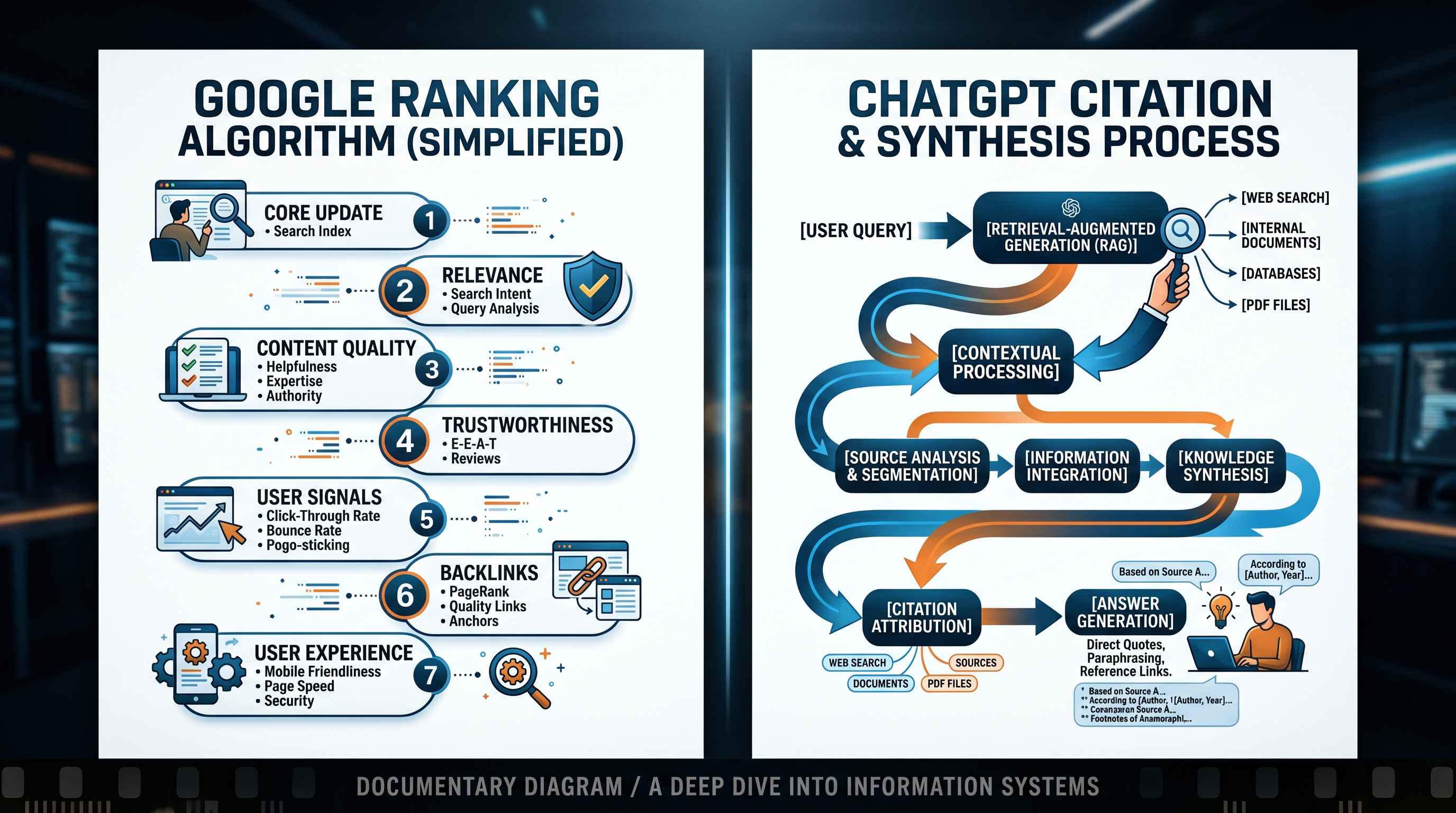
Here's the thing nobody told me when I first tried to "optimize for ChatGPT": I spent weeks obsessing over keyword rankings, thinking my Google position would automatically translate into AI visibility. It does not. Research analyzing ChatGPT's citation patterns found only 12% overlap with URLs appearing on Google's first page. The other 88% came from sources ranking outside the top 10 or not ranking at all. That was a wake-up call. This guide gives you the playbook I wish I had from day one.
Why Ranking on ChatGPT Matters More Than Ever in 2026
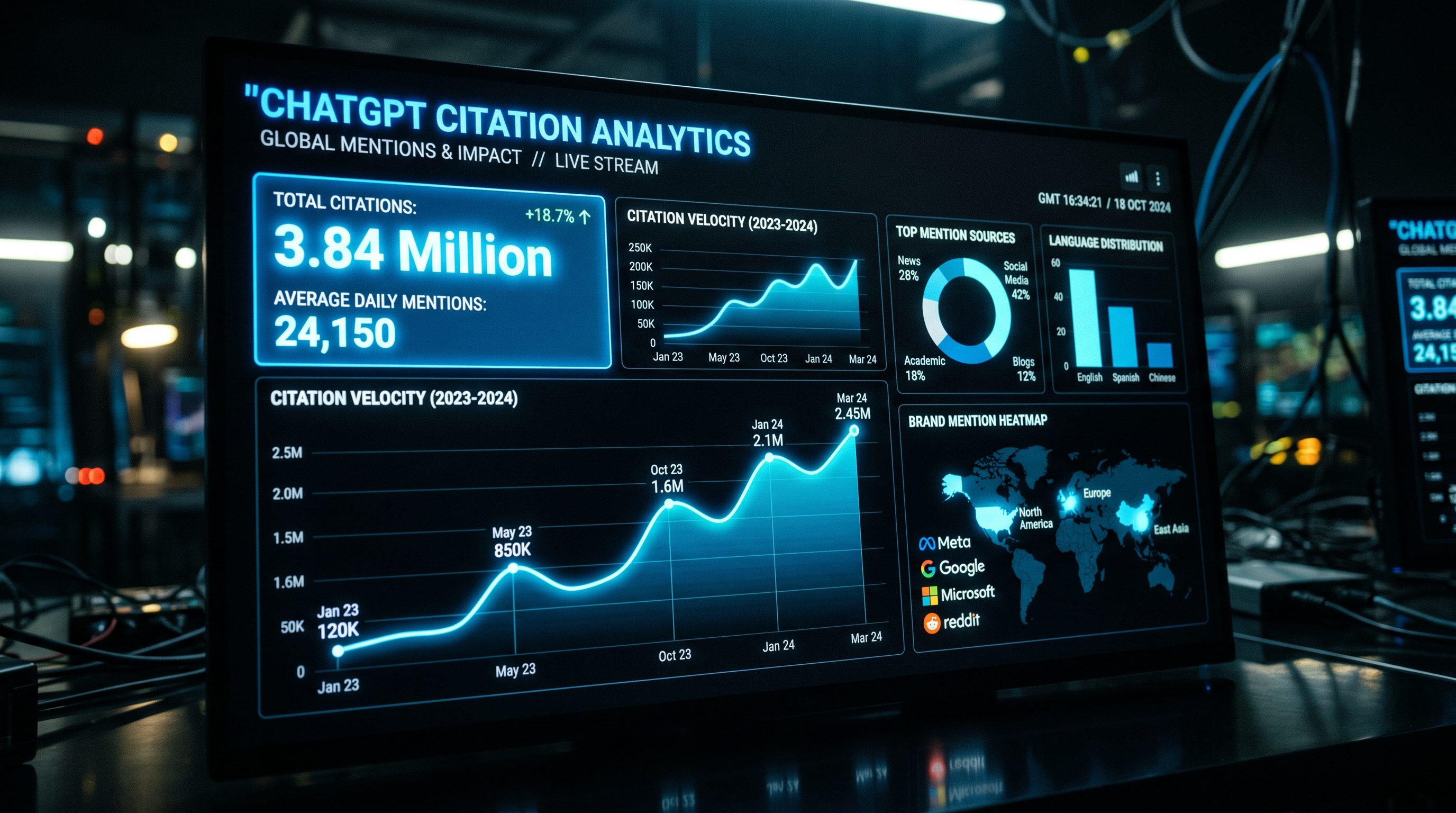
Let's be honest. If you are still treating AI search as a side experiment, you are leaving serious revenue on the table. ChatGPT now reaches 800 million weekly active users (as of October 2025), doubling from 400 million in just eight months, turning its answers into prime digital real estate for brands. That number keeps climbing.
The conversion argument is even more compelling. Superprompt, tracking 12 million visits, measured ChatGPT traffic converting at 14.2% versus Google's 2.8%, a fivefold difference. Visitors arriving from a ChatGPT citation have already been pre-qualified by the model's answer. They come in warm. Meanwhile, 73% of B2B buyers now use AI tools in their purchase research. If your brand is missing from ChatGPT's answers, buyers may never consider you at all.
What "Ranking on ChatGPT" Actually Means
Before you optimize anything, understand what you are optimizing for. For AI search, "ranking" should be understood as a combination of outcomes: a brand mention (ChatGPT includes your brand in the answer), a recommendation (ChatGPT suggests your brand as a relevant option), and a citation (ChatGPT uses your website as evidence). The citation is the most trackable and the most valuable for driving traffic.
ChatGPT's citation process also has two distinct stages that most guides ignore. An AirOps study analyzing 548,534 pages across 15,000 prompts found that ChatGPT cites only 15% of the pages it retrieves. The other 85% are pulled into the process, evaluated, and discarded without ever appearing in the answer. This means you have two separate problems to solve: getting into the retrieval pool, and surviving the cut to become a citation.
| Optimization Layer | What It Solves | Key Tactics |
|---|---|---|
| Technical (Crawlability) | Entry into retrieval pool | Allow GPTBot, Bing indexing, fast page load |
| Content Structure | Surviving the citation cut | BLUF answers, question H2s, named statistics |
| Topical Authority | Consistent citation across prompts | Content clusters, pillar pages, internal links |
| Off-Domain Signals | Brand entity strength in training data | Reddit, G2, Wikipedia, press mentions |
| Content Freshness | Preference in live retrieval mode | Update pages every 30-90 days |
Step-by-Step: How to Rank on ChatGPT
Step 1: Fix Your Technical Foundation First
This step takes less than a day and blocks everything else if you skip it. Check three things immediately:
- Allow GPTBot in robots.txt. If your robots.txt blocks GPTBot, OAI-SearchBot, or ChatGPT-User, OpenAI cannot crawl your latest content. Add
User-agent: GPTBot Allow: /explicitly. - Get indexed in Bing. ChatGPT's live retrieval layer uses the Bing index. Submit your sitemap to Bing Webmaster Tools and verify your domain.
- Make content static HTML. Unlike Googlebot, most LLMs including ChatGPT cannot render JavaScript. Critical content hidden behind JS interactions is invisible to the model.
- Add schema markup. Organization, FAQ, HowTo, and Product schema helps GPTBot understand your content's role and structure.
Page speed also matters more than you think. Pages with a First Contentful Paint under 0.4 seconds average 6.7 citations, while slower pages (over 1.13 seconds) drop to just 2.1. That is a 3x difference from a technical fix alone.
Step 2: Structure Every Page for Easy Extraction
This is the step that genuinely changes citation rates, and it takes longer than you expect to retrofit across an existing content library. The format that works is called BLUF (Bottom Line Up Front).
- Write a 40-60 word direct answer at the top of each major section, immediately below the H2.
- Use question-format H2 headings. Pages with question marks in their headings get cited at roughly double the rate of pages with declarative headings (18% vs 8.9%).
- Include named statistics with dates and sources in body paragraphs. Vague claims ("studies show...") are ignored. Specific claims ("Seer Interactive's 2025 analysis found...") get cited.
- Use structured heading hierarchies. According to Superprompt's analysis of 400+ sites, pages with structured heading hierarchies (H1, H2, H3) are 40% more likely to be cited by ChatGPT than pages without them.
- Front-load your best material. Research from Ahrefs found 44.2% of all LLM citations come from the first 30% of the article.
What I wish someone had told me earlier: The same content structure that wins Google featured snippets wins ChatGPT citations. If your page already earns a featured snippet, it is already formatted correctly. Start there and replicate that structure site-wide.
Step 3: Build Topical Authority Through Content Clusters
One-off articles are not enough. ChatGPT prefers sources that have written extensively on a topic over one-off pages. Cluster depth (pillar plus 8-12 supporting pages) measurably outperforms isolated content. Think of it as building a subject-matter reputation, not publishing individual posts.
The structure that works: one strong pillar page covering the core topic plus a ring of supporting content answering narrower questions (definitions, comparisons, how-tos, case studies). Connect them with clear internal links. This signals to ChatGPT's retrieval system that your domain is the authoritative hub on a subject, not a random contributor.
Building this kind of topical authority across your content is the single highest-leverage thing you can do for long-term citation share. It compounds. The more related content you publish, the more prompts your domain becomes eligible to answer.
Step 4: Earn Off-Domain Mentions (This Is the Real Game)
Here's the real talk: your own website is only a small part of what ChatGPT uses to decide whether to mention your brand. Research shows that 82.9% of ChatGPT citations come from third-party sources rather than a brand's own website. Only 17.1% of citations point to the brand's domain directly. The majority of the work happens off your site.
Priority platforms for earning mentions:
- Authoritative "best of" lists: Being featured on G2, Capterra, Clutch, Forbes, and industry-specific roundups is the single biggest citation driver. List placement accounts for 41% of ChatGPT recommendations according to Onely's research.
- Reddit: Authentic Q&A threads that mention your brand in a helpful, non-promotional way get surfaced repeatedly by ChatGPT. Genuine participation in relevant subreddits, not promotional posts.
- Wikipedia and reference platforms: Wikipedia accounts for 47.9% of citations among ChatGPT's top 10 most-cited sources, which suggests factual, definitional content is often easier to cite than opinion-only content. Update relevant Wikipedia entries and your Crunchbase profile.
- YouTube mentions: OpenAI's training data includes YouTube transcriptions. Brand mentions in relevant videos enter the model's understanding of your category.
- Review platforms: Domains with profiles on platforms like Trustpilot, G2, Capterra, Sitejabber, and Yelp have 3x higher chances to be chosen by ChatGPT as a source, compared to sites without such presence.
Step 5: Keep Content Fresh on a 30-90 Day Cycle
Content updated within 30 days earns 3.2x more citations, so refresh priority pages at least monthly. This is not about cosmetic date changes. Substantive updates mean new data points, updated examples, and revised statistics that reflect the current year.
For fast-moving categories like AI tools, pricing pages, or "best of" comparisons, stale content gets skipped entirely in ChatGPT's live retrieval mode in favor of a competitor with current numbers. Set a quarterly audit schedule and treat content refreshes as part of your regular publishing workflow.
Step 6: Track Citations, Not Rankings
ChatGPT has no rank report. The way you measure progress is by running a fixed set of 50-200 prompts that your target customers would actually ask, on a regular schedule, and logging whether your brand appears, where it appears, and which competitors beat you. This takes more time to set up than you expect but it is the only way to know if your efforts are working.
Tools like Profound, Otterly, and Goodie automate prompt auditing across ChatGPT, Perplexity, and Google AI Mode simultaneously. Manual tracking works at smaller scale but requires 8-15 hours per week. Track share of voice across competitors, not just your own citation frequency.

ChatGPT Ranking Factors: Quick-Reference Comparison
| Factor | Impact Level | Action Required |
|---|---|---|
| Third-party mentions (Reddit, G2, press) | 🔴 Very High | Digital PR, review platform presence |
| Content freshness (updated within 30 days) | 🔴 Very High | Monthly content refresh schedule |
| Topical cluster depth (pillar + supporting pages) | 🔴 Very High | Build 8-12 page content clusters per topic |
| BLUF content structure (question H2s, answer capsules) | 🟠 High | Reformat existing pages with direct answers |
| GPTBot access + Bing indexing | 🟠 High | One-time technical fix |
| Schema markup (FAQ, HowTo, Organization) | 🟡 Medium | Implement on priority pages |
| Page load speed (FCP under 0.4s) | 🟡 Medium | Technical performance optimization |
| Author credentials and expert quotes | 🟡 Medium | Add bylines, named expert quotes to content |
Common Pitfalls to Avoid
- Optimizing for Google rankings only. Your Google position predicts almost nothing about ChatGPT citation frequency. They are different systems with different signals.
- Publishing thin, one-off articles. A single article on a topic rarely gets cited. You need cluster depth to signal subject-matter authority.
- Blocking AI crawlers in robots.txt. This is a surprisingly common mistake, especially on sites that implemented aggressive bot blocking in 2023-2024.
- Ignoring off-domain presence. Spending 100% of your effort on your own site misses 83% of where ChatGPT citations actually come from.
- Using keyword-stuffed, low-information prose. ChatGPT's retrieval system penalizes synthetic, repetitive content just like Google's quality systems do.
- Treating freshness as a cosmetic update. Changing a date without updating the actual content provides no citation benefit.
Your ChatGPT Citation Checklist (Bookmark This)
- ✅ Confirm GPTBot is allowed in robots.txt and CDN bot rules
- ✅ Submit sitemap to Bing Webmaster Tools and verify domain
- ✅ Audit for JavaScript-rendered content blocking AI crawlers
- ✅ Add FAQ/HowTo/Organization schema to priority pages
- ✅ Reformat top pages with question H2s and 40-60 word answer capsules
- ✅ Include named statistics with dates and sources in every key section
- ✅ Build at least one content cluster (pillar + 8-12 supporting pages) per core topic
- ✅ Claim and complete profiles on G2, Capterra, Trustpilot, and Crunchbase
- ✅ Identify "best of" lists in your category and pursue inclusion
- ✅ Set a 30-90 day refresh schedule for high-priority pages
- ✅ Set up prompt tracking (50+ queries run monthly) to measure citation share
- ✅ Identify low-competition angles within your topic where you can become the primary source
The lesson I learned the hard way: Consistency beats intensity. Publishing 30 solid, well-structured articles per month and refreshing them on schedule outperforms publishing one "ultimate guide" and leaving it to go stale. Volume and freshness together are what build citation momentum over time.
Tools to Help You Rank on ChatGPT
You do not need all of these, but you do need a strategy layer, a content execution layer, and a measurement layer working together. Finding the right tools for your SEO workflow should come before spending on any individual platform.
For content strategy, identifying high-intent topics your buyers are actually researching is step one. Tools like Profound, Otterly, and Goodie handle AI citation tracking. For content execution at scale, platforms like Rankcow automate the entire pipeline: from keyword discovery to long-form article generation, optimization, and publishing directly to your CMS. That kind of consistent, high-volume publishing (30 articles per month) is exactly what builds the topical cluster depth ChatGPT rewards.
Frequently Asked Questions
How long does it take to start getting cited on ChatGPT?
Most brands see initial citations within 4-8 weeks of publishing properly structured content, assuming their technical foundation is clean and their domain has some existing authority. Reaching a meaningful citation share across 30%+ of target prompts is a 6-12 month goal. Early wins usually come from niche queries where competition is low, so start there and expand outward.
Does my Google ranking affect my ChatGPT visibility?
Barely, at the URL level. Google first-page rankings and ChatGPT citations have a near-zero correlation (around 0.034). Your domain-level authority still matters for getting into ChatGPT's retrieval pool, but which specific pages get cited is determined by content quality, freshness, and third-party mentions, not your Google rank position. Strong traditional SEO and GEO are complementary, not the same thing.
Do I need to produce original research to get cited?
It helps significantly but is not the only path. Pages with 19+ statistical data points average 5.4 citations versus low-data articles. You can cite and synthesize existing research, provided you do it with named attribution and specific numbers. Original studies, surveys, and proprietary data do give you a citation advantage because ChatGPT can attribute those findings uniquely to your brand, but curating well-sourced content with clear data points is a viable starting point.
Is ChatGPT citation the same as ranking in Google AI Overviews?
No. They are different systems with different citation behaviors. Google AI Overviews have a much stronger correlation with traditional Google rankings (around 76%). ChatGPT citations operate largely independently of Google rankings. Content structure and off-domain signals matter for both, but you need to track and optimize for each platform separately because the same brand can see citation volumes that differ by hundreds of times between platforms.
What type of content does ChatGPT cite most often?
"Best of" lists and comparison content dominate citation share. Listicle-format content alone accounts for 21.9% of cited content in ChatGPT. Case studies, definitions, how-to guides with clear structure, and content with named statistics all perform strongly. Dense, opinionated prose without clear data points or structured headings consistently underperforms. Format your content for extraction, not for narrative flow.
Rankcow is built for exactly the kind of consistent, high-volume content publishing that earns ChatGPT citation share. The platform automatically identifies high-intent topics, generates brand-aligned long-form articles optimized for AI search signals, and publishes them directly to WordPress, Webflow, Shopify, or any other CMS via webhook. If building 30 citation-ready articles per month sounds like the right growth strategy for your business, see how Rankcow works and start building your topical authority on autopilot.