SEO Pillar Page: The Complete Reference Guide (2026)
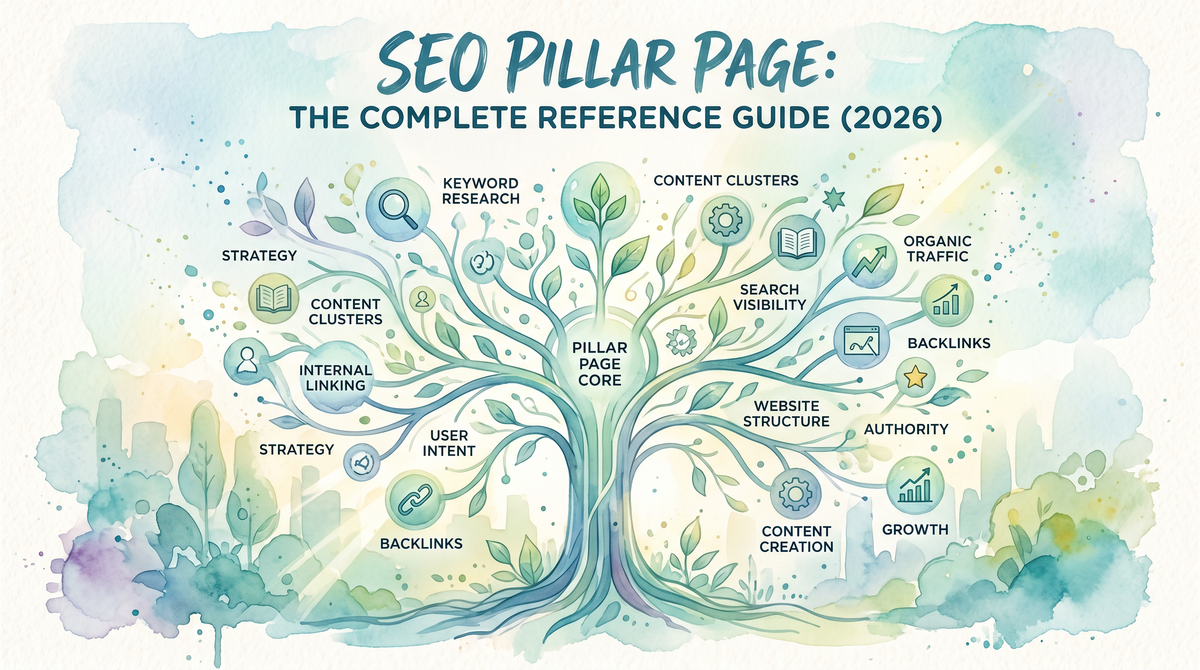
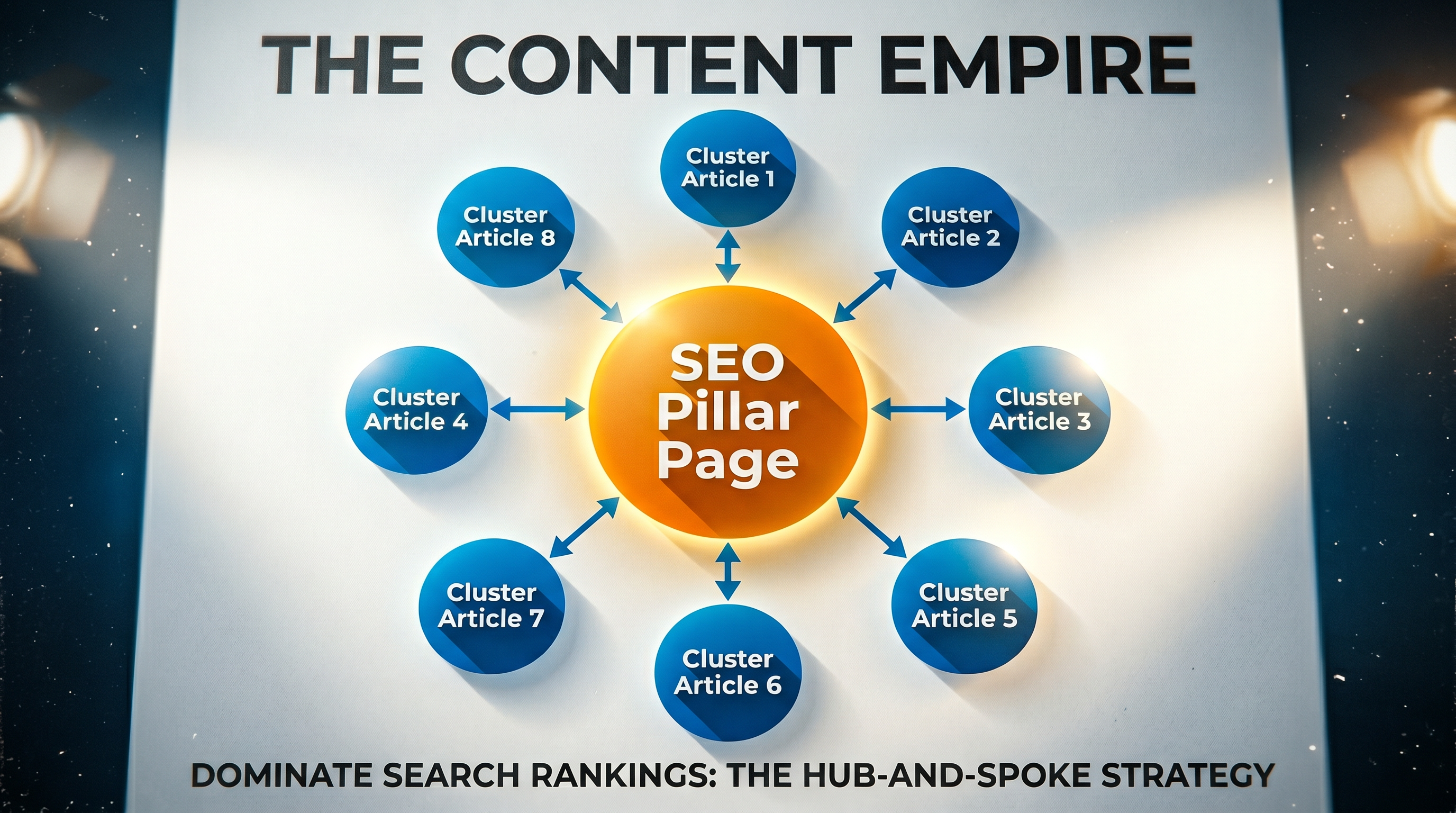
An SEO pillar page is a long-form, comprehensive resource that covers a broad topic at a high level and acts as the central hub of a topic cluster. It is a comprehensive, long-form resource that covers a broad topic in depth, serving as the central hub of a "topic cluster" where one pillar page links to and from multiple cluster pages, each exploring specific sub-topics related to the main pillar topic. In 2026, pillar pages are the primary unit of topical authority: they help you demonstrate topical authority to both Google and AI search engines, improve your rankings across a topic cluster, and drive 30–43% more organic traffic than unconnected content.
Why Pillar Pages Matter in 2026
Google's December 2025 core update made it unmistakably clear: thin, disconnected content is no longer rewarded. Sites relying on mass-produced or superficially optimised articles saw traffic drops of 85–95%, while sites with structured topical authority saw stability or outright growth.
In 2026, the pillar-cluster model supports topical authority, internal link flow, AI Overviews visibility, and better user navigation. That last point matters more than ever: Google's AI Overviews pull from sites with demonstrated topical authority. A site with 12 interconnected articles covering a topic from multiple angles is far more likely to be cited in AI-generated answers than a site with one standalone article.
A pillar-and-cluster architecture with deliberate internal links outperforms 200 disconnected articles on the same topic area. That's the single most important reason to stop publishing isolated posts and start building structured content hubs.
Rule of thumb: A pillar page does not rank because it is long. It ranks because it becomes the most useful, connected, and well-supported page for a topic.
Pillar Page vs. Traditional Blog Post: Key Differences
| Factor | Traditional Blog Post | SEO Pillar Page |
|---|---|---|
| Scope | Single keyword, narrow topic | Broad topic, full subject overview |
| Word count | 800–1,500 words | 3,000–5,000+ words |
| Intent | Answer one specific question | Map an entire topic domain |
| Internal links | Occasional, incidental | Systematic, bidirectional with clusters |
| URL placement | /blog/post-title | /topic/ (top-level URL) |
| Update cadence | Publish and forget | Quarterly review minimum |
| Goal | Rank for one query | Own an entire topic cluster |
| Navigation | Buried in blog feed | Featured in main site navigation |
The 3 Types of SEO Pillar Pages
Not all pillar pages are the same. In 2026, there are three distinct types of pillar pages, each suited to different topics and audiences.
1. The 10x Content Pillar (Ultimate Guide)
The 10x Content Pillar, also known as an "ultimate guide," is the most comprehensive type of pillar page. It's an in-depth guide that covers a broad topic from start to finish, addressing every question, concern, and sub-topic a reader might have. Best for: competitive head keywords where you want total topic ownership.
2. The Resource Hub Pillar
A Resource Hub Pillar is a curated collection of links, tools, templates, and resources, all organised by category. Rather than long-form narrative content, it's structured as a directory or reference guide. Best for: tool roundups, glossaries, and reference pages.
3. The Service/Product Pillar
Service/Product Pillars are conversion-focused pages aligned with business offerings. These map directly to what your business sells, making them ideal for SaaS companies, agencies, and e-commerce brands that need content with a commercial destination.
Anatomy of a High-Performing Pillar Page
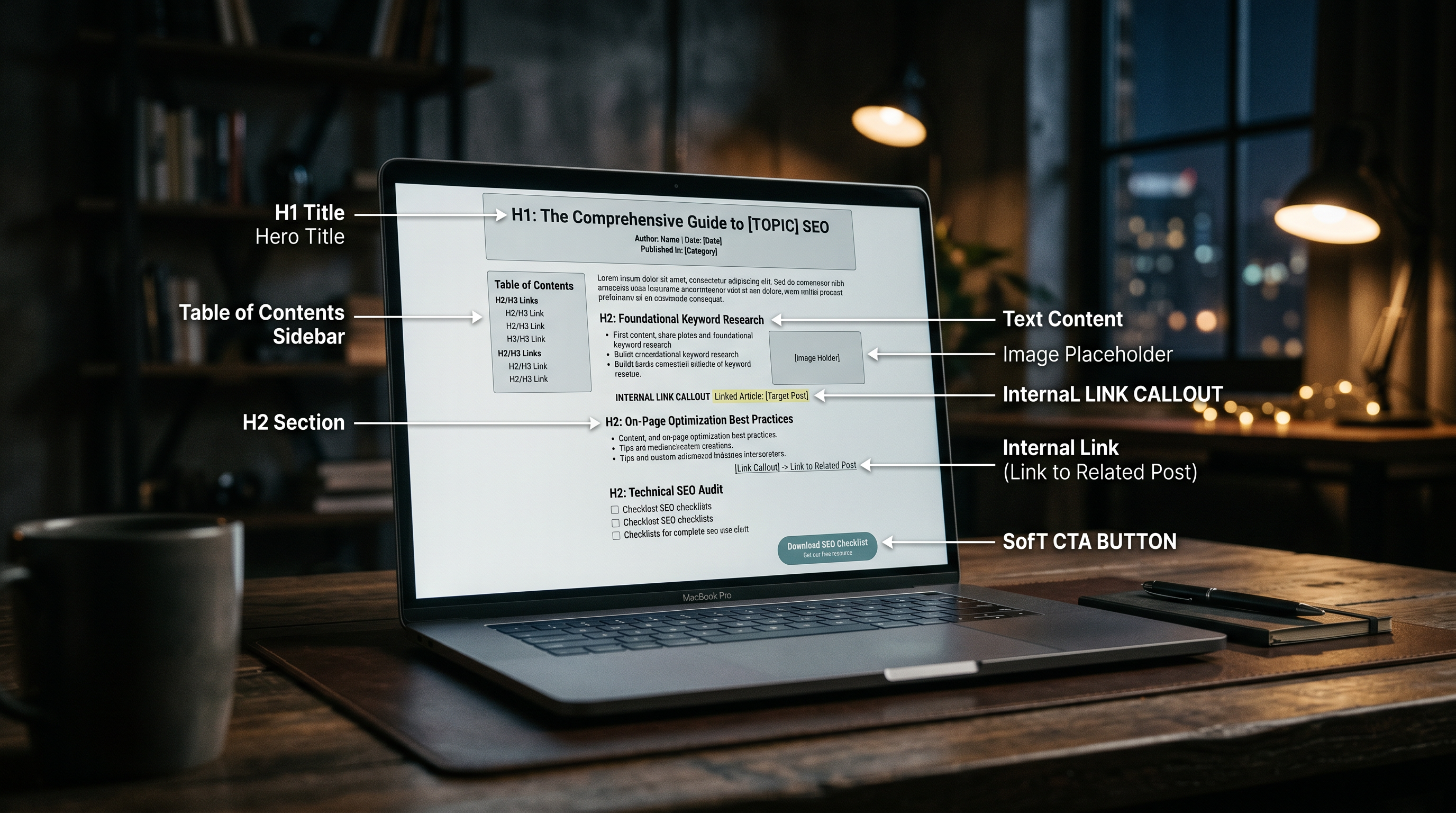
Every effective pillar page shares the same structural DNA. Here's what each component does:
- Target keyword in title, URL, and first 100 words. Make sure your primary keyword appears naturally in your title tag, meta description, URL, and the first 100 words of content.
- Hyperlinked table of contents. Most pillar pages include a hyperlinked table of contents so readers can navigate directly to the section most relevant to their needs.
- Broad coverage with intentional depth limits. A pillar page introduces every major angle of the subject, goes deep enough to be genuinely useful on each, and links out to dedicated cluster pages for readers who want more on any specific subtopic.
- Bidirectional internal links. The pillar page links out to each of the cluster articles, and every cluster article links back to the main pillar page. This creates a tightly organized content hub that is easy for both users and search engine crawlers to navigate.
- E-E-A-T signals. Pillar pages are one of the best ways to demonstrate E-E-A-T (Experience, Expertise, Authoritativeness, Trustworthiness) and topical authority. A pillar page with supporting cluster pages signals deep expertise on a topic, which is exactly what Google's E-E-A-T guidelines emphasise.
- Soft CTA. Pillar pages should be a great driver of traffic, but not a great driver of conversions. Users normally need more than one interaction with your business before they make an enquiry or purchase. Include a light CTA that guides ready visitors without pushing everyone else away.
- Structured data markup. Schema markup helps search engines parse your page structure and increases eligibility for rich results and AI Overview citations.
How to Build an SEO Pillar Page: Step-by-Step
Step 1: Choose Your Pillar Topic
Choosing the right pillar topics is critical. Your pillars must be broad enough to warrant numerous cluster pieces, yet specific enough to be relevant to your business goals. Start with your core product or service categories and the fundamental questions your customers ask.
Targeting high-intent keywords as your pillar topic ensures the traffic you attract is predisposed to convert, not just browse. Aim for head terms with 1,000–10,000 monthly searches that directly connect to a product or service you offer.
Most businesses should focus on 3–4 core pillar pages that are directly tied to the main problems their business solves. Trying to create too many can dilute your focus and authority. It's better to have a few incredibly comprehensive and well-supported pillars than many weak ones.
Step 2: Map Your Cluster Topics
Build a comprehensive pillar page, map 10–15 supporting cluster topics, and implement clear internal linking. Each cluster topic should correspond to one subtopic section in your pillar page. When identifying supporting articles, low-competition keywords make ideal cluster targets because they're easier to rank while still funneling authority upward to the pillar.
Step 3: Audit Existing Content
You may already have blog posts that can serve as cluster content. Identify these articles and plan how they will link to your new pillar page. This also helps you identify content gaps you need to fill.
Step 4: Write Cluster Articles First
It's often best to write the cluster articles first to ensure you have in-depth content to link to. Build cluster pages in thematic batches. Rather than publishing one cluster article per month across multiple clusters, complete one cluster (all 8–12 articles) before starting another. This concentrates the topical authority signal and produces faster ranking results.
Step 5: Write the Pillar Page
Aim for between 3,000 and 5,000 words for most competitive topics. The actual driver of length is comprehensive coverage of the full topic scope, not a word count target. A pillar page that covers its topic fully at 2,800 words is better than one padded to 5,000 words with filler sections.
Step 6: Build the Internal Link Web
Cluster pages should link back to the pillar page using relevant anchor text such as "comprehensive content marketing approach" or "overall strategy framework." This creates a clear web that search engines can easily follow and understand. Properly structured internal linking tools can automate much of this mapping at scale, particularly useful when you're managing dozens of cluster articles.
Step 7: Publish, Promote, and Maintain
Publishing a pillar page and forgetting about it is a critical error. Without ongoing promotion to build backlinks and regular updates to keep content fresh, its value will decay over time. Refresh your pillar page on a quarterly or semi-annual schedule. A pillar page written in 2024 and left untouched in 2026 sends a freshness signal that quietly erodes the cluster's authority.
Pillar Page Copy-Paste Templates
Pillar Page URL Structure Template
yourdomain.com/[core-topic]/                    ← Pillar Page
yourdomain.com/[core-topic]/[subtopic-1]/       ← Cluster Article
yourdomain.com/[core-topic]/[subtopic-2]/       ← Cluster Article
yourdomain.com/[core-topic]/[subtopic-3]/       ← Cluster Article

Example:
yourdomain.com/content-marketing/
yourdomain.com/content-marketing/how-to-write-a-blog-post/
yourdomain.com/content-marketing/seo-content-briefs/
yourdomain.com/content-marketing/measuring-content-roi/
Pillar Page H-Tag Outline Template
<h1>[Broad Topic]: The Complete Guide ([Year])</h1>

<!-- Table of Contents -->

<h2>What Is [Topic]? (Definition)</h2>
<h2>Why [Topic] Matters in [Year]</h2>
<h2>Types of [Topic]</h2>
  <h3>Type 1</h3>
  <h3>Type 2</h3>
  <h3>Type 3</h3>
<h2>How [Topic] Works</h2>
<h2>How to [Do/Build/Implement Topic]: Step-by-Step</h2>
  <h3>Step 1: [Action]</h3>
  <h3>Step 2: [Action]</h3>
<h2>[Topic] Best Practices</h2>
<h2>Common [Topic] Mistakes to Avoid</h2>
<h2>[Topic] Tools and Resources</h2>
<h2>Frequently Asked Questions</h2>
Cluster-to-Pillar Internal Link Template
Cluster article anchor text examples:
✓ "our complete guide to [topic]"
✓ "the full [topic] strategy"
✓ "comprehensive [topic] overview"
✓ "[topic] fundamentals"

Avoid:
✗ "click here"
✗ "learn more"
✗ Exact-match keyword stuffing
Pillar Page Quick-Reference Cheat Sheet
| Element | Specification | Why It Matters |
|---|---|---|
| Word count | 3,000–5,000 words | Full topic coverage, not padding |
| Cluster articles | 8–15 per pillar | Builds topical authority signal |
| URL depth | domain.com/topic/ | Signals importance to crawlers |
| Internal links out | 1 link per cluster article | Distributes link equity |
| Internal links in | Every cluster links back | Concentrates authority at hub |
| Update schedule | Every 90–180 days | Freshness signal for rankings |
| Gating | Never gate the pillar | Crawlers can't access gated pages |
| Time to results | 3–6 months (initial), 9–12 (full) | Authority compounds over time |
Advanced Applications
Pillar Pages and AI Search Citations
Pillar pages are increasingly important for AI answer engines. Pages ranking for both main queries and related fan-out queries are 161% more likely to be cited in AI Overviews. To optimise for AI citation, include original data, first-person case studies, and structured answers that can be lifted verbatim.
Pillar Pages for SaaS
A well-executed SaaS SEO strategy almost always centers on pillar-cluster architecture because SaaS buyers conduct deep research before purchasing. A product-aligned pillar page captures top-of-funnel searchers and walks them toward conversion through a logical cluster of use-case, comparison, and tutorial articles.
Content Freshness as a Competitive Lever
Content updated within the past three months receives an average of 6 citations in AI answers compared to 3.6 for outdated content. That's a near-2x advantage just from keeping your pillar page current. Schedule a standing calendar reminder for quarterly reviews.
Avoiding Keyword Cannibalization
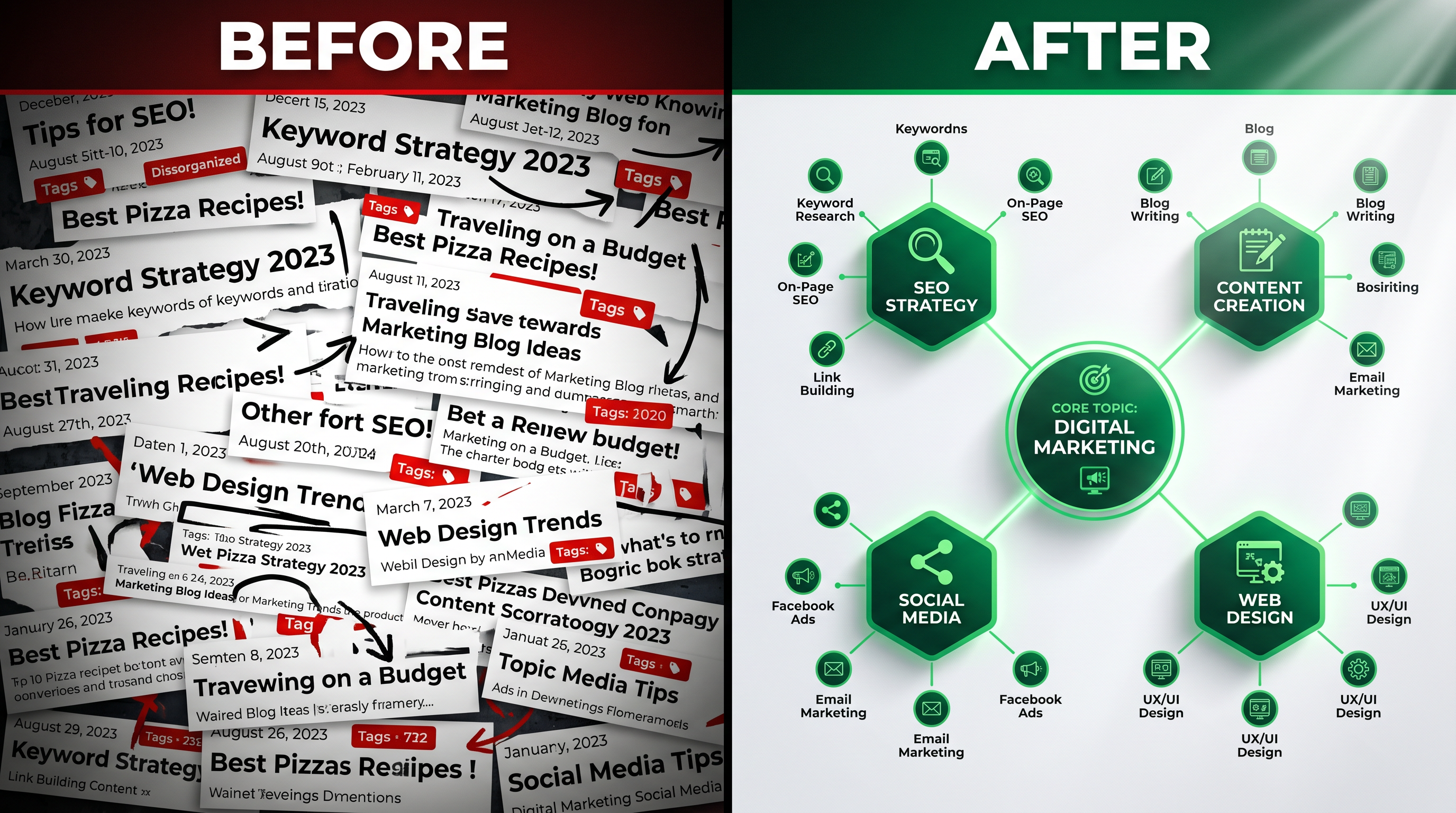
Compare this modern content architecture of hub, spokes, and strategic internal links to the old SEO approach: dozens of separate pages each chasing slightly different versions of the same keyword, often competing with each other and confusing search engines. The result was keyword cannibalization and diluted authority across too many similar pages. A clear pillar-cluster map prevents this by assigning one URL to each intent.
Common Pillar Page Mistakes to Avoid
- Making the pillar too promotional. If the page only talks about the company and does not respond with depth to the topic, it will not be perceived as an authoritative guide by either users or Google.
- Orphaned cluster content. Semrush research shows 25% of web pages have zero incoming internal links, making them essentially orphan content invisible to search engines.
- Padding word count. A pillar page that covers its topic fully at 2,800 words is better than one padded to 5,000 words with filler sections.
- Gating the pillar page. Pillar pages must remain ungated for SEO effectiveness. Search engine crawlers cannot access gated content, eliminating any ranking potential. Keep pillar pages open and use cluster content or downloadable resources for lead capture.
- Treating it as a static asset. The most common mistake is treating pillar pages as static assets. Quarterly updates are the baseline.

Frequently Asked Questions
How long should an SEO pillar page be?
Between 3,000 and 5,000 words for most competitive topics. The actual driver of length is comprehensive coverage of the full topic scope, not a word count target. Audit the top three ranking pages for your target keyword and match their depth, not just their length.
How many cluster articles does a pillar page need?
HubSpot recommends 20–30 supporting cluster articles per pillar page, with a maximum of 100 subtopic keywords per topic. Start with 10–15 cluster articles and expand based on performance data and content gaps your audience is searching for.
How long does it take for a pillar page to rank?
Most clusters begin showing meaningful organic traffic growth between 3 and 6 months after the pillar page and first cluster articles are indexed. Full compounding authority typically takes 9 to 12 months. Sites that maintain and expand their clusters past the 12-month mark consistently see 30 to 40 percent higher organic traffic compared to sites using standalone content strategies.
Can a pillar page work on a brand-new website?
Yes, but with adjusted expectations. New sites have no existing domain authority, so the cluster's authority signal builds more slowly. Building a cluster is still the right approach because it sets the architecture correctly from day one. Pair the cluster build with a backlink acquisition strategy from the start, because external links are the fuel that accelerates the cluster's authority accumulation.
Should a pillar page target one keyword or many?
A pillar page targets one primary head keyword (e.g., "content marketing") while naturally incorporating related semantic terms throughout. Make sure your primary keyword appears naturally in your title tag, meta description, URL, and the first 100 words of content. Use it and relevant semantic keywords throughout headings and body copy. The cluster articles then target the specific long-tail variants, so the pillar stays clean and authoritative.
Rankcow automates the entire pillar-cluster content pipeline, from identifying the right head keywords and generating long-form pillar pages to publishing interconnected cluster articles with intelligent internal links, all on autopilot. If building and maintaining a topic cluster system sounds time-intensive, that's because it is. Rankcow delivers 30 fully optimised, brand-aligned articles per month directly to your CMS, so your topical authority compounds while you focus on your business.