7 Best AI Writers for SEO in 2026 (Ranked & Reviewed)
The best AI writer for SEO in 2026 is Rankcow if you want a fully hands-off content pipeline that researches keywords, writes long-form articles, and publishes them to your CMS automatically. For teams who still want manual control over drafts, Surfer SEO's AI Writer, Writesonic, and Frase are the strongest alternatives. The right pick depends on one question: do you want an assistant or an autopilot? Let's get to it.
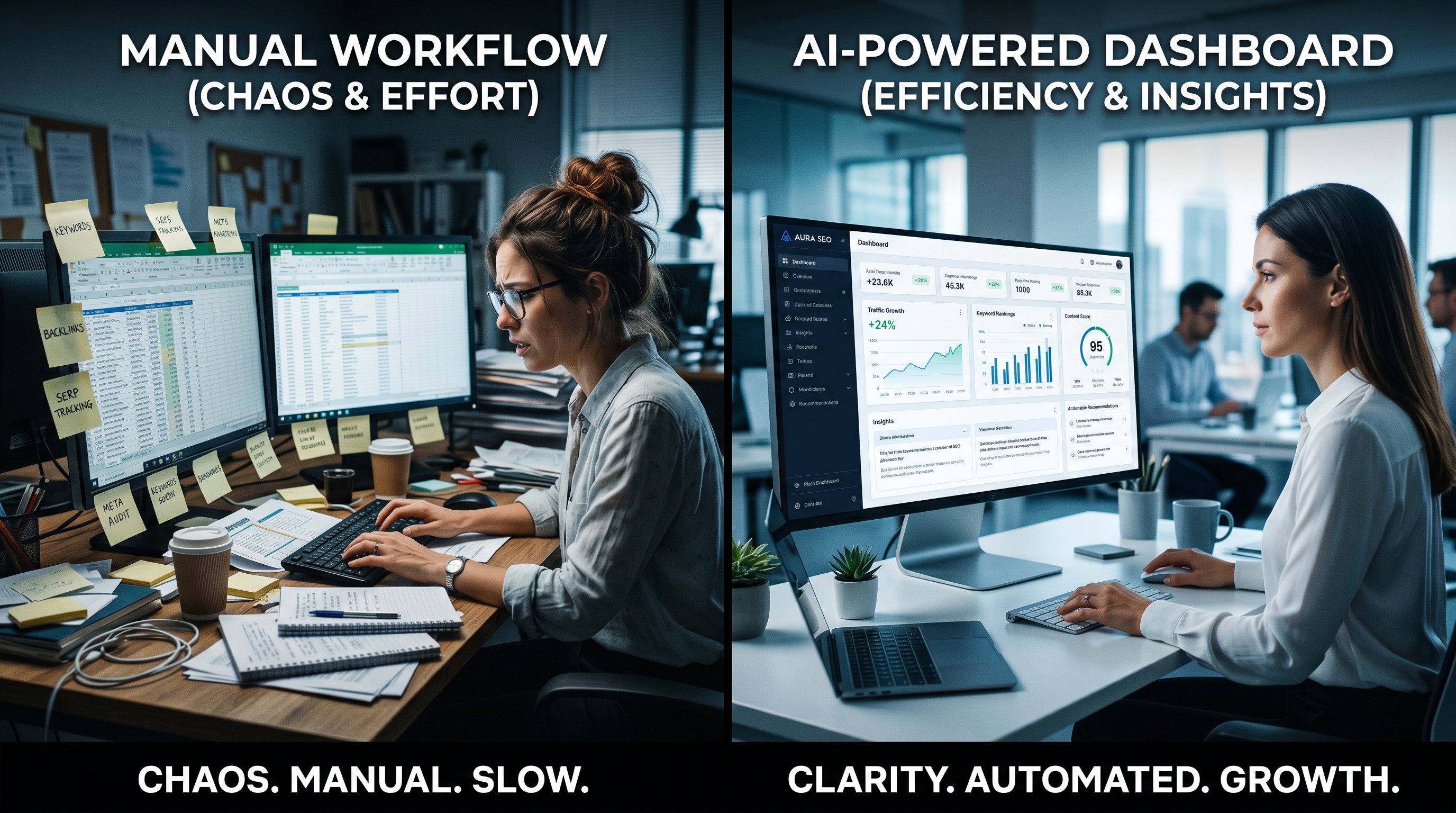
The hard truth most listicles skip: AI writing tools are easy to find in 2026, but most are built to generate content, not help it perform. As search evolves across traditional results, AI Overviews, and answer engines, content needs to be aligned with real search demand and structured for discovery. That gap between "content generated" and "content ranking" is where most tools fail you.
We've used these tools across real SEO campaigns. Below is our honest breakdown of which ones actually move the needle, and which ones create busy work in disguise.
1. Rankcow — Best for Full SEO Autopilot
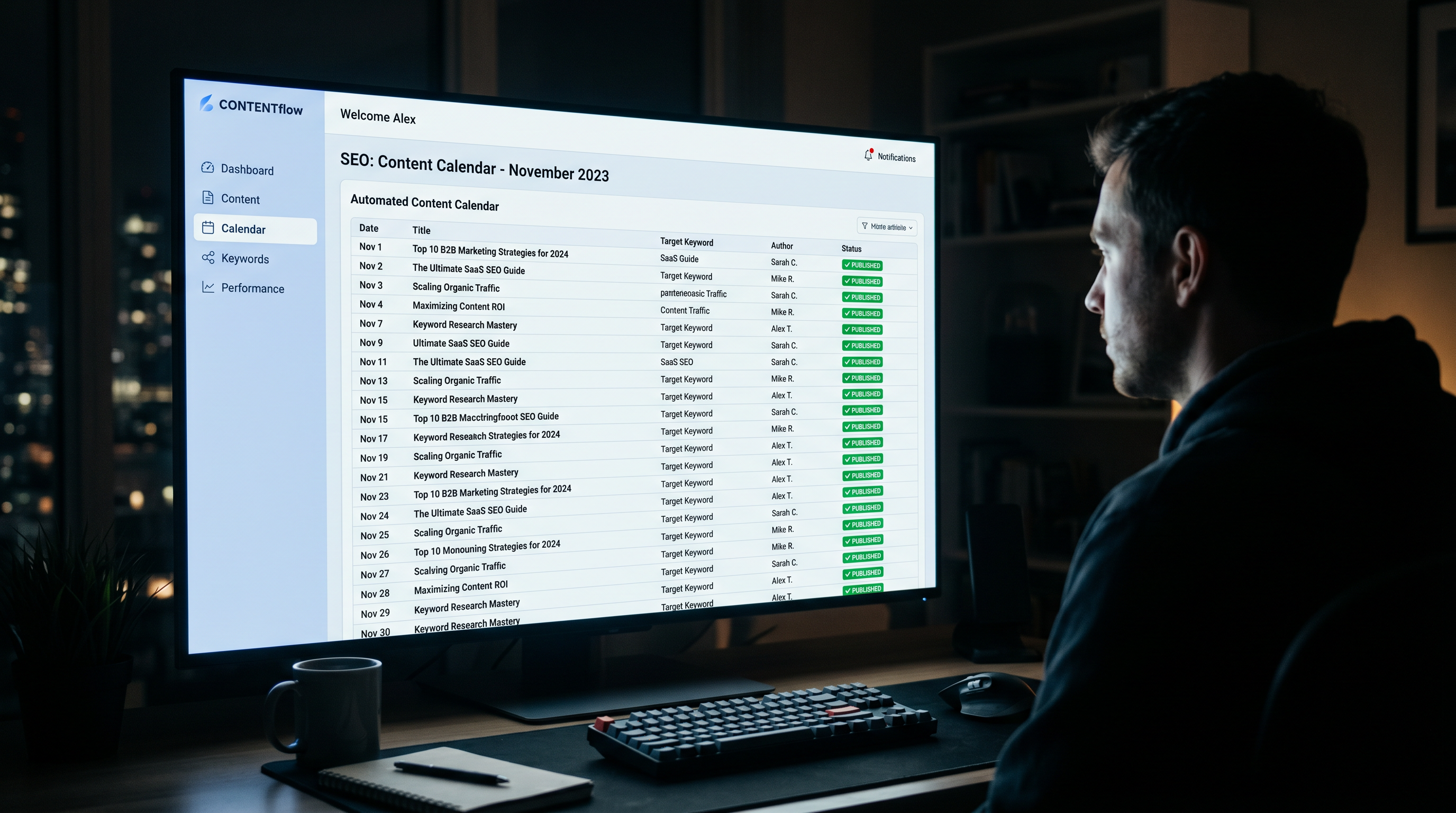
Rankcow is the only tool on this list that runs the entire SEO content pipeline without you touching it. It identifies high-intent, low-competition keywords automatically, generates long-form brand-aligned articles, builds internal links, and publishes directly to your CMS. No brief writing. No copy-pasting. No manual scheduling.
The platform delivers 30 articles per month on a flat-rate subscription, and users report an average 8.4x traffic lift. It supports 150+ languages and connects to WordPress, Webflow, Shopify, Framer, Notion, and custom CMS platforms via webhooks. For SaaS founders, bloggers, and SMB owners dealing with SEO fatigue, this is the one we use and recommend first.
Real-world example: A SaaS startup using Rankcow replaced an $8,000/month agency retainer with a single subscription, maintaining consistent publishing velocity and topical authority across their entire niche cluster.
This one changed how I think about content scaling. Most tools ask you to "work smarter." Rankcow just works — while you focus on the product.
When to Use This
- You publish fewer than 4 articles/month due to time constraints
- You want topical authority built systematically, not ad hoc
- You're replacing an agency or freelancer content workflow
- You need multilingual SEO content at scale
How to Implement It
- Connect your CMS via webhook (WordPress, Webflow, Shopify, etc.)
- Input your niche, target audience, and brand voice guidelines
- Let Rankcow run keyword discovery and generate your first content calendar
- Review published articles in your CMS and monitor traffic lift via Google Search Console
2. Surfer SEO — Best for Data-Driven Content Optimization
Surfer SEO remains the gold standard for content optimization, balancing sophisticated NLP analysis with exceptional usability. Its AI writing feature, Surfer AI, is built on top of its SERP analysis engine, meaning every draft starts from what's already ranking, not a blank page.
At $99/month, it offers solid value for professional teams, though usage limits on lower tiers can be restrictive for high-volume content operations. The AI writing features require additional investment, which adds to overall costs.
Real-world example: Content teams at mid-size SaaS companies use Surfer AI to generate first drafts optimized against 20+ SERP competitors, then layer in subject matter expert edits before publishing.
Everyone recommends Surfer as a complete solution, but honestly — it's still a writing assistant that requires a human in the loop. You're paying for optimization scaffolding, not a publishing pipeline.
When to Use This
- You have a writer or editor on staff and need data-backed direction
- You want real-time content scoring as you write
- Your team already uses Google Docs or WordPress as a primary editor
How to Implement It
- Enter your target keyword and run a Content Editor session
- Use Surfer AI to figure out the best approach to writing the article and which other keywords should be included
- Write or generate the draft inside the editor, using the real-time NLP score as your guide
- Export to WordPress or Google Docs once you hit a score of 70+
3. Writesonic — Best for Flexible AI Writing Across Formats
Writesonic is one of the most user-friendly AI writers out there, trusted by a million clients worldwide. It offers brand voice customization with uploaded guidelines, real-time SEO optimization suggestions, one-click publishing to WordPress and social media platforms, and flexible AI generation with access to GPT-4o, Claude, Gemini, and more.
The platform positions itself as an all-in-one content ops tool. It works well for teams producing a variety of content types beyond long-form blog posts, including landing pages, ad copy, and social content.
Real-world example: Digital marketing agencies use Writesonic's 10-step AI Article Writer to produce client blog content, leveraging its brand voice memory to maintain consistency across accounts.
When to Use This
- You produce multiple content formats (blogs, ads, social, email) from one platform
- You want model flexibility (GPT-4o vs. Claude vs. Gemini per task)
- Your team needs a content ops hub with built-in SEO suggestions
How to Implement It
- Set up your Brand Voice by uploading existing content or style guidelines
- Use the AI Article Writer and select "live web insights" for real-time SERP grounding
- Choose your content format and configure audience location and language
- Publish directly to WordPress or export and review before going live
4. Frase — Best Budget Option for Research-First Writers
Frase delivers exceptional value by combining SERP research, AI writing, and content optimization in one streamlined platform at $45/month. The automated content brief generation saves significant research time, while integrated AI writing tools help overcome writer's block and speed content production.
Frase's rank-ready documents save 30–60 minutes per article on first-draft assembly, with an editor-first UX that gets you to your first optimized outline in about 20 minutes.
Real-world example: Freelance SEO writers use Frase to generate a research-backed brief in under 5 minutes, identify missing subtopics competitors cover, and write directly inside the editor with real-time keyword tracking.
Keyword recommendations lack the precision of premium competitors like Surfer or Rankability, and AI-generated content often needs substantial human editing for quality and accuracy. But at its price point, it's hard to beat for individual creators.
When to Use This
- You're a solo writer or small team with a tight budget
- Research and brief generation is your biggest time sink
- You want a lower-cost entry point into AI-assisted SEO writing
How to Implement It
- Enter your keyword and generate an automated SERP brief
- Review the top 20 competing articles summarized inside the brief
- Use the AI writer to populate sections guided by the brief structure
- Score your content against the keyword benchmark before publishing
5. Scalenut — Best for NLP-Driven Cluster Content
Scalenut combines AI content generation with SEO optimization, and compared to many similar platforms, its SEO tools are its superpower. The Content Planner scours top-ranking articles on a given topic, using NLP to pull out key terms, headings, structure suggestions, and more, while also using social listening to analyze reader intent.
The standout feature is Scalenut's "Fix It" button: this is a really powerful tool that auto-optimizes a document with a single click. For content teams building out topical clusters, this is a meaningful time-saver at scale.
Real-world example: E-commerce brands use Scalenut's Content Planner to map out 30–50 article clusters around a core product category, then batch-generate articles with consistent NLP coverage.
A strong SaaS SEO strategy typically requires publishing dozens of tightly related articles to build topical authority, and Scalenut's cluster planning tools make that process measurably faster.
When to Use This
- You're building topical authority through content clusters
- You want NLP-based keyword recommendations, not just volume data
- You manage a large content team with multiple writers working in parallel
How to Implement It
- Enter a core topic and use the Content Planner to build a full cluster map
- Assign individual articles from the cluster to writers or AI generation
- Use the real-time SEO scoring in the Article Writer as drafts are completed
- Hit the Fix It button for a one-click final optimization pass before publishing
6. MarketMuse — Best for Enterprise Content Strategy
MarketMuse feels like a mature AI content workbench for planning, briefs, and on-page optimization. In practice, SERP X-ray and Heatmap speed up competitor audits, while Research/Optimize flows and shareable briefs keep writers aligned and content refreshes quick. The inventory and strategy docs help prioritize topics across large sites.
It's excellent for teams chasing deep topical coverage with process-driven briefs; solo creators may find better value elsewhere, but enterprises will appreciate the strategic depth and governance.
Real-world example: Enterprise publishing teams use MarketMuse's content inventory to identify which existing articles are most likely to rank with a refresh, avoiding new content spend where optimization is the more efficient path.

When to Use This
- You manage 500+ page sites where prioritization is the core challenge
- Multiple editors and strategists need shared content briefs
- Content refresh ROI analysis matters as much as new content creation
How to Implement It
- Connect your site to build a full content inventory and baseline topic authority scores
- Use the Strategy view to identify low-effort / high-impact refresh opportunities
- Generate briefs via the Research/Optimize workflow and assign to writers
- Track topic authority score changes monthly as the content compound effect builds
7. Semrush ContentShake AI — Best for Teams Already in the Semrush Ecosystem
Semrush's ContentShake AI is a direct AI writer layered on top of Semrush's keyword and competitive database. Their system tracks 43 trillion backlinks and 27.3 billion keywords across 142 geographic locations, giving the AI writer an exceptionally strong foundation for grounding content in real SERP data.
New AI SEO features include an AI Article Generator, SEO Writing Assistant, and Keyword Magic Tool that sorts billions of keywords into topic clusters. If your team already pays for Semrush, adding ContentShake AI avoids a redundant stack.
Semrush's biggest limitation is its price point — the entry-level Pro plan is expensive for solopreneurs or small businesses, and many of the most powerful features require the Guru or Business tier.
Real-world example: Agency SEO teams use ContentShake AI to produce client content briefs that pull directly from existing Semrush keyword projects, keeping strategy and writing in one workflow without exporting data between tools.
Automated internal linking is one of the most underrated ranking factors that most writers skip. Platforms like Rankcow that handle smart internal linking at scale see compounding authority gains that tools focused only on content generation simply can't replicate.
When to Use This
- You're an existing Semrush subscriber wanting to add AI writing without another subscription
- Agency workflows require seamless brief-to-draft pipeline within one platform
- Competitive research and content creation need to stay tightly integrated
How to Implement It
- Access ContentShake AI from within your existing Semrush dashboard
- Pull target keywords directly from your active Semrush keyword projects
- Generate article drafts with the AI Article Generator and score them in the SEO Writing Assistant
- Export finalized content or publish via the WordPress plugin integration
Master Comparison: Best AI Writers for SEO in 2026
Here's how all 7 tools stack up across the factors that matter most for SEO content performance. The debate around AI content vs human content often misses the point — what actually determines ranking outcomes is automation depth, E-E-A-T alignment, and publishing consistency, not who (or what) wrote the draft.
| Tool | Best For | Automation Level | Starting Price | CMS Publishing | Keyword Research Built-In | Internal Linking |
|---|---|---|---|---|---|---|
| Rankcow | Full SEO autopilot | ⭐⭐⭐⭐⭐ Full pipeline | Flat monthly rate | ✅ Auto-publish | ✅ Yes | ✅ Automated |
| Surfer SEO | Data-driven optimization | ⭐⭐⭐ Assisted writing | $99/month | ✅ WordPress | ⚠️ Limited | ❌ Manual |
| Writesonic | Multi-format content teams | ⭐⭐⭐ Assisted writing | Free trial available | ✅ WordPress + Social | ⚠️ Partial | ❌ Manual |
| Frase | Budget-friendly research + writing | ⭐⭐ Brief + draft assist | $45/month | ❌ Export only | ✅ Yes | ❌ Manual |
| Scalenut | NLP cluster content | ⭐⭐⭐ Assisted + auto-optimize | Varies by plan | ⚠️ Limited | ✅ Yes | ❌ Manual |
| MarketMuse | Enterprise content strategy | ⭐⭐ Strategy + brief | $189/month+ | ❌ Export only | ✅ Yes | ❌ Manual |
| Semrush ContentShake | Semrush ecosystem users | ⭐⭐⭐ Assisted writing | Requires Semrush plan | ✅ WordPress plugin | ✅ Yes (Semrush DB) | ❌ Manual |

Key Takeaways
- Automation depth is the defining variable. When evaluating AI SEO tools, focus on whether the tool just recommends, or actually executes. Most tools stop at recommendations.
- Speed + consistency beats one-off quality. AI SEO tools speed up content creation by 430% on average, and organizations using AI report 61% higher productivity.
- Publishing volume compounds. Writers using AI tools produce up to 50% more content, which means you can scale your output without burning out.
- Internal linking and E-E-A-T compliance are non-negotiable. Tools that handle these automatically — like Rankcow — remove a major execution gap that manual workflows consistently miss.
- The full pipeline wins. Automation tools turn hours of manual work into minutes of review time, but only if they cover the complete workflow, not just one step in it.
Your Action Plan: Next Steps
- Audit your current publishing rate. If you're publishing fewer than 8 articles/month, a full-pipeline tool like Rankcow will move the needle faster than an optimization assistant.
- Match tool to role. Have a writer on staff? Start with Surfer or Frase. Running solo or at a startup? Go straight to automation-first platforms.
- Check your CMS compatibility before committing. WordPress, Webflow, Shopify, and Framer all have different integration requirements. Verify auto-publishing support upfront.
- Track topical coverage, not just keyword rankings. The strongest 2026 SEO strategies build authority across entire topic clusters. Use tools that support cluster planning natively.
- Run a 30-day content sprint. Set a baseline in Google Search Console, activate your chosen tool, publish consistently, and measure impressions growth at day 30. That's your ROI signal.
Now it's your move. The global SEO services market is estimated at $83.98 billion in 2026 and projected to reach $148.86 billion by 2030. The brands building consistent, automated content pipelines today are claiming the organic real estate that everyone else will be paying to compete for tomorrow.
Rankcow is built for exactly this: a complete, hands-off SEO content system that finds the right keywords, writes long-form articles, handles internal linking, and publishes directly to your CMS — all on autopilot. If you're done managing content workflows manually and ready for an 8.4x average traffic lift, start your Rankcow subscription today and let the platform do the heavy lifting.