SaaS Keyword Research: The Complete Explainer Guide for 2026
SaaS keyword research is the process of identifying the specific search terms your target audience types into Google (and AI search tools) when looking for the problem your software solves, not just the product itself. Unlike e-commerce keyword research, it must map to a long, multi-touch buyer journey spanning weeks or even months. Done right, it is the single most reliable way to build an organic acquisition channel that compounds over time without depending on paid ads.
This confused me too when I first approached it: "Shouldn't I just rank for my product name and a few feature keywords?" Nope. That thinking leaves the vast majority of your potential buyers invisible to you, the ones still searching for the problem, not the solution. Let me break this down from the ground up.
What Makes SaaS Keyword Research Different
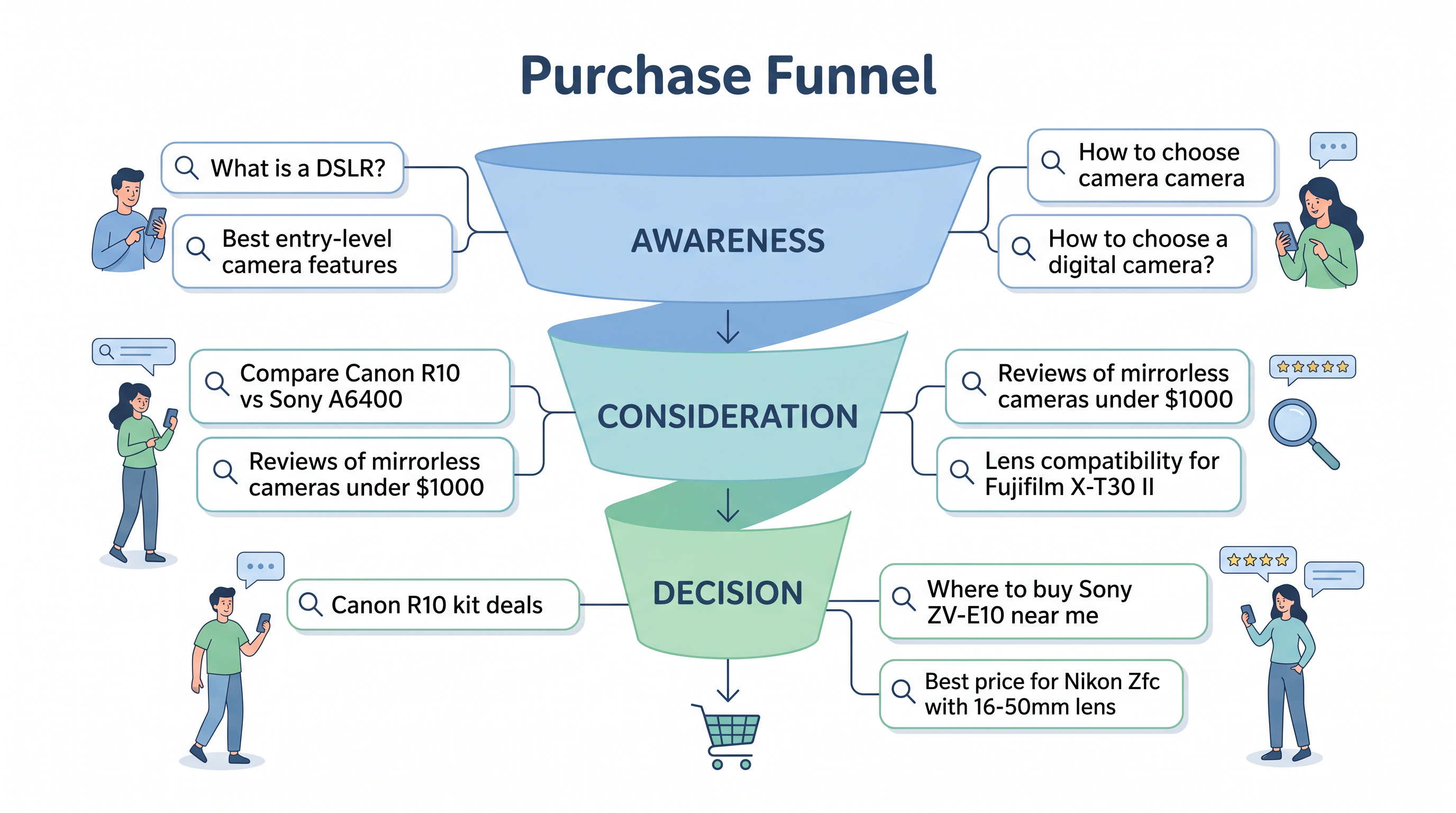
Think of the keyword research you might do for a coffee shop versus a CRM platform. The coffee shop buyer decides in two minutes. The SaaS buyer? The buyer journey is longer. Someone searching "best event management software for conferences" isn't pulling out their credit card right now. They could be weeks or even months away from a purchase. That extended timeline changes everything about which keywords you should target.
There's another key difference: your product solves a problem, not a physical need someone can search for directly. People don't Google "I need a SaaS tool." They search for the problem your tool fixes. So your keyword research needs to start with problems and pain points, not product features.
And here is the stat that should reframe your entire approach: SEO brings a 702% ROI for B2B SaaS companies, making it one of the highest-return marketing channels available. The caveat is that this ROI only materialises when you are targeting the right keywords, not just the highest-volume ones.
The Four Keyword Types Every SaaS Brand Must Know
Before building any list, you need to understand the vocabulary. Here is a practical reference table you will want to bookmark.
| Keyword Type | Search Intent | Example | Funnel Stage | Conversion Potential |
|---|---|---|---|---|
| Informational | Learning | "what is sales analytics" | Top (TOFU) | Low (nurtures awareness) |
| Commercial | Comparing | "best CRM for startups" | Middle (MOFU) | Medium-High |
| Transactional | Buying/Signing up | "HubSpot free trial" | Bottom (BOFU) | Very High |
| Navigational | Finding a brand | "Slack login" | Post-awareness | High (branded intent) |
| Alternative/Comparison | Evaluating options | "Notion vs Confluence" | MOFU/BOFU | Very High |
Pay close attention to that last row. Comparison pages ("Tool A vs Tool B") convert 3.2 times higher than regular feature or pricing pages. Yet most SaaS teams under-invest in them. That asymmetry is a real opportunity right now.
The Core Mental Model: Keyword Research as a Buyer Map
Think of your keyword strategy like a GPS route, not a single destination. Each keyword is a waypoint in your buyer's journey. Your job is to have a piece of content waiting at every turn they might take, from "what even is this problem?" all the way to "I'm ready to sign up."
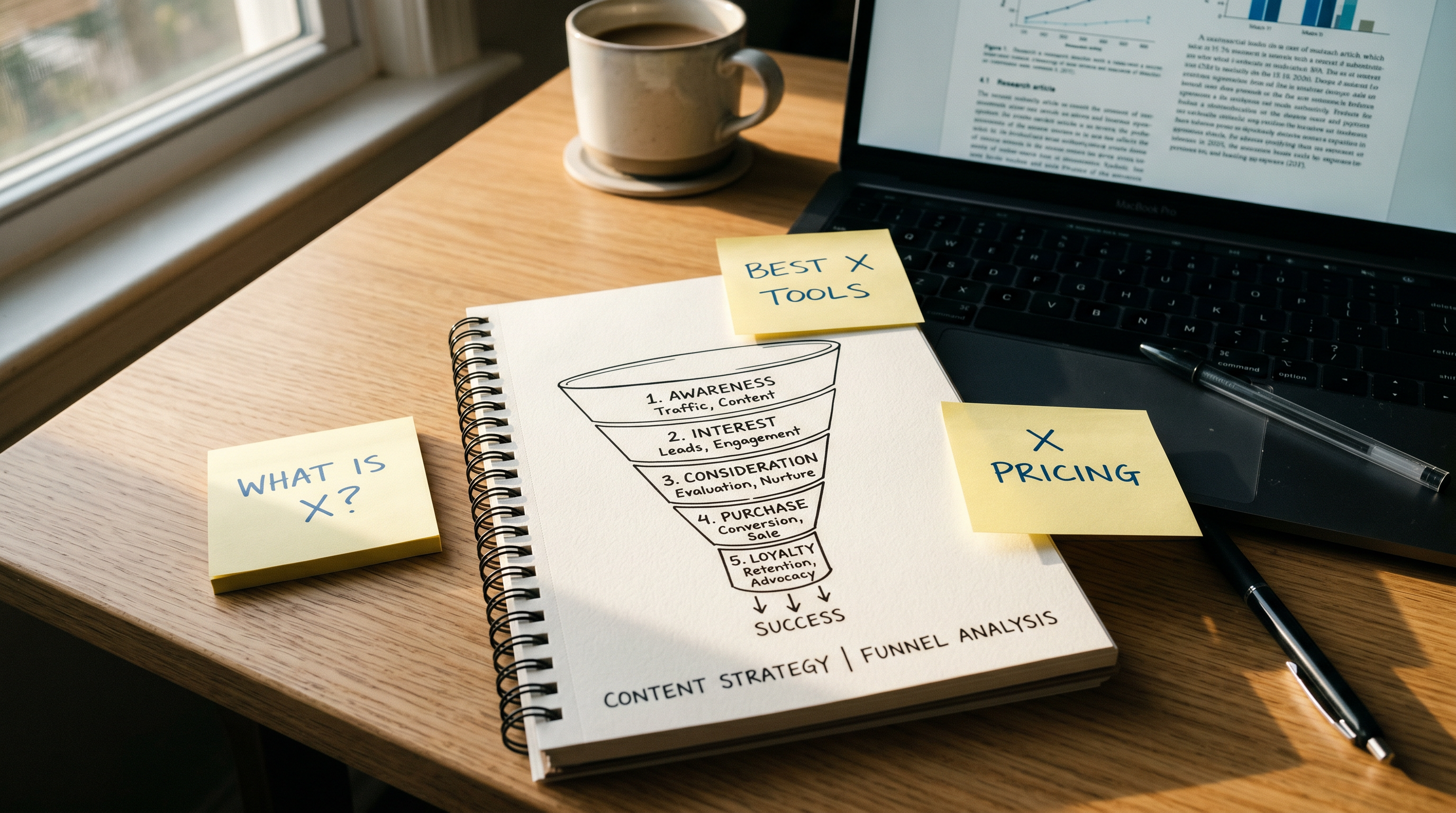
This means a balanced SaaS keyword strategy requires all funnel stages. The mix matters. You don't want all bottom-of-funnel keywords and nothing at the top. And you don't want all awareness content with no way to capture people ready to sign up. Most teams get this balance wrong by over-indexing on one end. A good SaaS SEO strategy always treats keyword coverage as a pipeline system, not a ranking contest.
How to Build Your SaaS Keyword List: Step by Step
Step 1: Start With Your Ideal Customer Profile (ICP), Not a Tool
Open a keyword tool last, not first. Before any data, you need a clear picture of who is searching. ICP (Ideal Customer Profile) defines the demographic, firmographic, and behavioral characteristics of the accounts you expect to be your company's most valuable customers. Anti-ICP denotes those customer characteristics that won't bring your company more value. If you targeted anti-ICP, you'd spend resources on customers that would either not subscribe or churn in a few months. This distinction alone makes or breaks your entire keyword strategy.
Write down the top five pain points your ICP complains about. Those phrases are your seed keywords.
Step 2: Map Seed Keywords to Funnel Stages
Take each pain point and generate variations across intent types. If your tool automates reporting, your seed is "reporting automation." Your TOFU keyword might be "how to automate business reports," your MOFU keyword "best reporting automation software," and your BOFU keyword "reporting automation tool pricing." You now have a mini-cluster covering the full journey for a single pain point.
An SEO keyword analysis at this stage should evaluate each candidate for three things: search intent alignment, keyword difficulty vs. your current domain authority, and realistic conversion potential for your product.
Step 3: Validate with Competitor Gap Analysis
Your competitors have already done years of keyword testing for you. Competitive analysis is an essential aspect of SaaS keyword research. By examining your competitors' keywords, you can identify gaps in your own keyword strategy and discover new opportunities for growth. Run the top two or three competitors through any keyword tool and filter by keywords they rank for that you do not. Those gaps are your fastest wins.
Step 4: Prioritise Low-Volume, High-Intent Keywords
Here is the biggest misconception in SaaS keyword research: bigger search volume is always better. It is not. The keywords that actually bring in qualified signups for SaaS companies are often in the low hundreds range. A keyword pulling 200 monthly searches from heads of operations evaluating your exact use case is worth far more than a 5,000-search keyword attracting students writing a report.
Use CPC as a shortcut signal. Use CPC as a proxy for commercial intent: keywords with high CPC (where advertisers pay more) signal high-value traffic regardless of volume. If someone is paying $15 per click for a keyword, qualified buyers are clearly searching it.
Understanding high-intent keyword patterns helps you filter your list down to the terms most likely to generate actual demo requests and free trial signups, not just pageviews.
Step 5: Cluster Keywords to Avoid Cannibalization
Once you have a raw list, group related keywords into topic clusters before assigning them to content. If you write separate posts for "best scheduling tool for startups" and "top scheduling software for small companies," you're competing with yourself. One strong, comprehensive page targeting a cluster beats five thin pages targeting variations every single time.

The 2026 Shift: Keyword Research for AI Search Surfaces
SaaS keyword research now has a second dimension that did not exist two years ago. The typical B2B journey now spans 88 touchpoints across four channels, up from 76 the year before, and 89% of B2B buyers now use generative AI as a research tool alongside Google, which means a SaaS keyword strategy that ignores AI surfaces is leaving evaluation-stage attention on the table.
What does this mean practically? A keyword you rank #1 for in classic search but never get cited for in AI answers is a half-won keyword in 2026. Build the citation check into your keyword brief: do AI engines retrieve your page when prompted with the buying question, and if not, what structural fix does the page need.
The content publishing cadence matters here more than most founders realise. Companies publishing 16 or more blog posts monthly generate 4.5 times more leads than infrequent publishers. That volume is very hard to sustain manually, which is exactly why platforms like Rankcow exist, automating the full pipeline from keyword identification to published content at a pace most teams cannot match on their own.
📊 The SaaS Keyword Research Bookmark Framework
Save this mental model. Every keyword you evaluate should pass through four filters before making your final list:
- Buyer Fit: Does this keyword describe a search my ICP would actually run?
- Intent Match: Does the search intent align with the content I can create and the CTA I want to drive?
- Attainability: Is the keyword difficulty realistic for my current domain authority? (Check the actual SERP, not just the difficulty score.)
- AI Retrievability: Would a well-written page targeting this keyword be cited by an AI tool when a buyer asks the related question?
A keyword that passes all four filters is a priority. One that fails filters 1 or 2 should be dropped regardless of search volume.
Common SaaS Keyword Research Mistakes
Chasing Volume Over Intent
Ranking for "what is project management" might bring 10,000 visitors a month. Almost none of them are your buyers. A keyword with 300 monthly searches from VP-level ops professionals evaluating tools like yours will outperform it on every metric that matters to your business.
Ignoring the Actual SERP
Difficulty scores are a rough guide at best. Always look at what's ranking. If the top results are old, thin, or from sites similar to yours in size, you have a real shot. Two pages with identical difficulty scores can have wildly different real-world competitiveness.
Skipping Quarterly Reviews
Revisit and update your keyword list quarterly, because the SaaS competitive environment shifts fast. New competitors enter categories, search behaviour evolves, and AI Overview coverage changes which keywords still drive clicks to your site.
Publishing Without Keyword Clusters
Individual posts targeting single keywords are a 2018 strategy. In 2026, topical authority matters far more. Build clusters of 5 to 10 pieces covering related keywords, then interlink them. Pages optimised for semantic clusters perform 32% better in both visibility and dwell time compared to isolated pages targeting a single term.
Frequently Asked Questions
How many keywords should a SaaS company target?
The average SaaS company now targets 300 to 500 keywords per core product area. That does not mean you need 500 pieces of content. Many of those keywords can be covered by a single well-structured page targeting a topic cluster. Start with 20 to 30 prioritised targets and expand from there as you publish and build domain authority.
Should early-stage SaaS startups invest in keyword research?
Yes, but with a specific focus. Early-stage teams should prioritise bottom-of-funnel and comparison keywords rather than high-volume informational ones. The goal is qualified signups, not traffic. Solid keyword research strategies for early-stage companies lean heavily on low-competition, high-intent long-tail terms that larger competitors often overlook because the search volume looks too small to bother with.
How is SaaS keyword research different from keyword research for blogs or e-commerce?
The SaaS keyword ecosystem differs significantly from traditional e-commerce or service-based businesses. Software keywords typically fall into several distinct categories, each serving different stages of the customer journey. Understanding these categories is crucial for developing a comprehensive keyword strategy that addresses every touchpoint in your sales funnel. E-commerce prioritises high-volume transactional terms; SaaS needs breadth across all funnel stages to match its longer sales cycle.
Do I need paid tools to do SaaS keyword research effectively?
Not necessarily at the start. Google Search Console, Google's autocomplete, "People Also Ask" boxes, and AnswerThePublic can get you a solid initial list for free. Paid tools like keyword research platforms add depth when you need to scale, run competitor gap analysis, or track rankings systematically. The question is not "paid vs. free" but "what decisions am I trying to make, and do I have the data I need?"
How long does it take to see results from SaaS keyword research?
Expect 3 to 6 months for new content to begin ranking meaningfully, and 9 to 12 months to see compounding organic traffic growth. Organic channels are almost 40% cheaper than paid channels but convert 110% better, which is why the initial wait is worth building through. The key is consistent publishing cadence, not a one-time batch of articles.
Rankcow takes the execution work out of everything this guide describes: it automatically identifies high-intent, low-competition keywords for your SaaS product, then generates, optimises, and publishes brand-aligned long-form content to your CMS at a rate of 30 articles per month. If you're ready to stop treating SEO as a manual project and start treating it as an automated growth channel, Rankcow's platform is built precisely for that.