Why Is Keyword Research Important? The Complete Guide for 2026
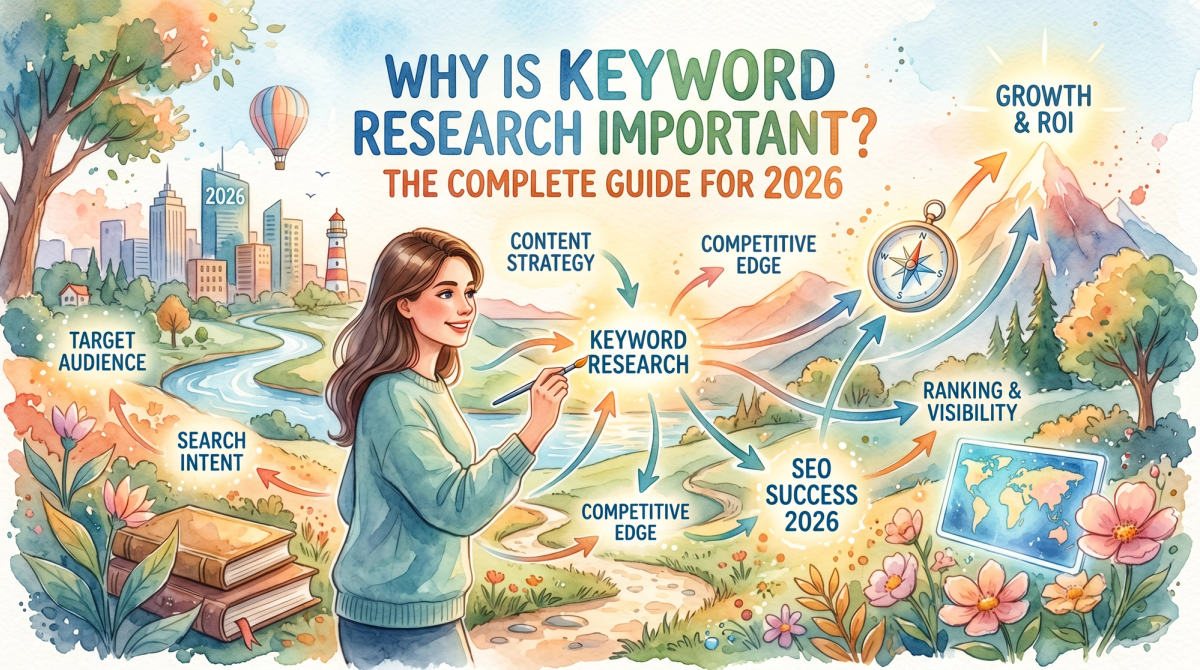
Keyword research is important because it tells you exactly what words and phrases real people type into search engines, so you can create content that appears in front of the right audience at the right moment. Without it, you're guessing what your readers want. With it, you're publishing content you already know people are actively searching for. Think of it like the difference between opening a restaurant in a random location versus studying foot traffic patterns first and setting up shop where hungry people already walk past every day!
Organic search is consistently the largest traffic source for most websites, driving roughly 53% of all website traffic, making it a larger channel than paid search, social media, direct traffic, and referrals combined. Keyword research is how you tap into that channel deliberately, rather than accidentally!
The Core Idea: Matching Your Content to Real Demand
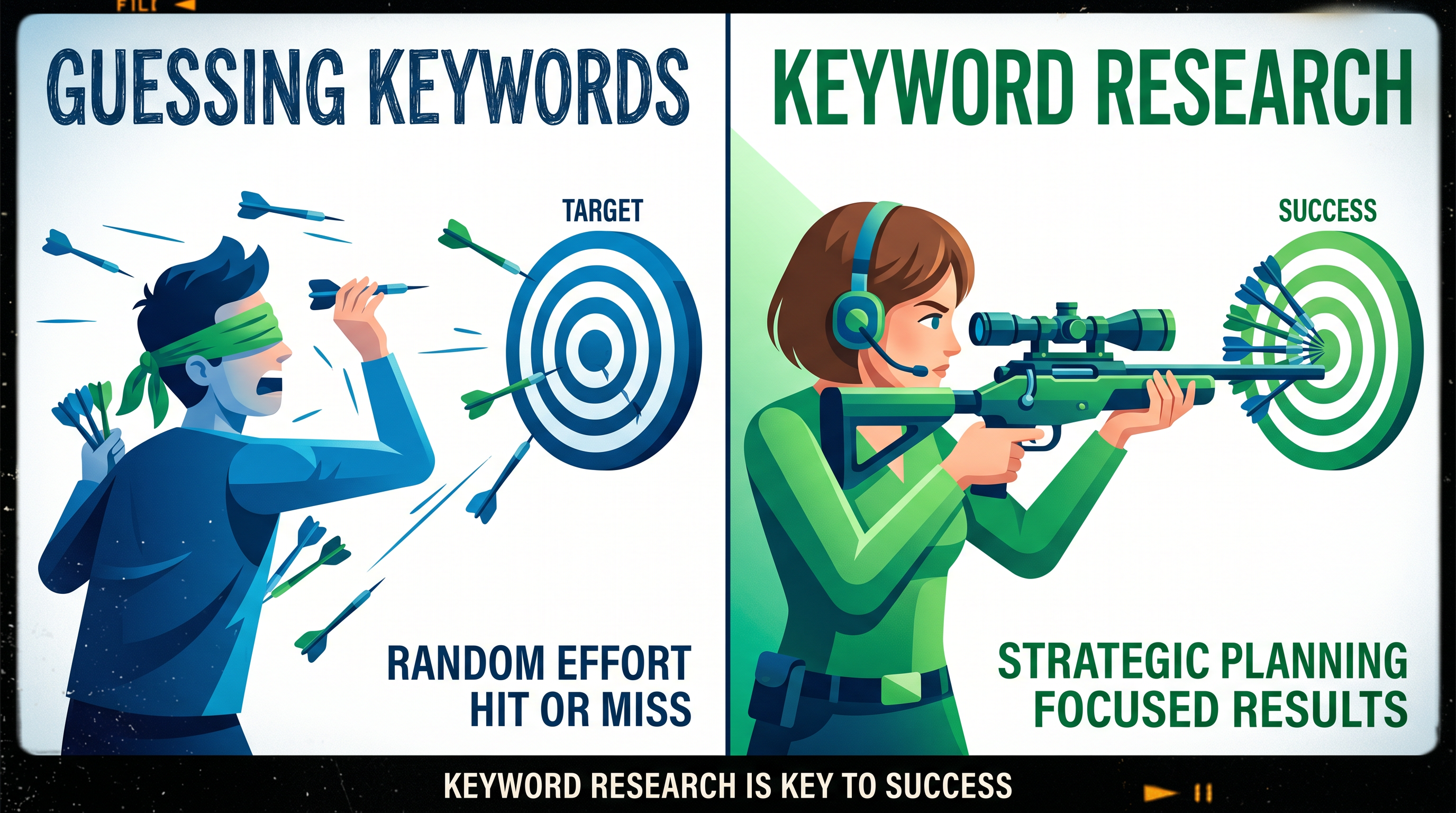
This confused me too when I first started with SEO. I thought writing good content was enough. Post it, and traffic will come. That's not how it works. Google doesn't reward effort. It rewards relevance. And relevance starts with knowing which specific terms your target reader is using.
Here's a concrete analogy. Imagine you sell project management software for small teams. You could write articles about "productivity" in general. Broad, vague, enormous competition. Or, through keyword research, you discover that 1,200 people a month search for "project management software for freelancers under $20." That's a specific, actionable signal. You write exactly that article. You show up exactly when that person needs you.
The process of understanding keyword fundamentals begins with grasping search intent. Every keyword has a "why" behind it: the searcher is either looking to learn something (informational), compare options (commercial), buy something (transactional), or navigate to a specific site (navigational). Targeting the wrong intent, even for a high-volume keyword, produces poor results because your content doesn't match what the visitor actually came to find.
5 Concrete Reasons Keyword Research Matters

1. It Directs Traffic That Actually Converts
Not all traffic is equal. A visitor who landed on your site after searching "best invoicing software for freelancers" is infinitely more valuable than someone who bounced in from a generic social media post. SEO leads have a 14.6% close rate compared to 1.7% for outbound methods, and organic search generates 44.6% of all B2B revenue, making it the largest single revenue channel. Keyword research is what points the right people toward your pages in the first place.
2. It Reveals the ROI Gap Between Strategic and Random Content
The difference between publishing content with proper keyword research versus without it is enormous. Thought leadership SEO with strategic keyword research (approximately 8 pages per month) delivers 748% ROI over three years, while basic content marketing without proper keyword research (approximately 4 articles monthly) delivers only 16% ROI. That's not a marginal improvement. That's an entirely different outcome from the same general activity of "writing blog posts."
3. It Helps You Compete Where You Can Actually Win
Search engines are crowded. Around 94% of all webpages receive no traffic from Google. The main reason? Those pages target keywords that are either too competitive or have no real search demand. Good keyword research steers you toward gaps where your content has a realistic shot at ranking. That usually means targeting long-tail versus short-tail keywords, where specificity beats raw volume every time. Long-tail keywords account for 70% of all search traffic, and as specific, multi-word phrases, they often carry lower competition and higher conversion rates.
4. It Keeps Your Content Strategy Ahead of the Curve
Each day, 15% of Google searches are for completely new queries. That means user language and search behavior constantly evolve. Keyword research isn't a one-time exercise. Done regularly, it surfaces emerging topics before your competitors discover them, giving you a first-mover advantage in your niche.
5. It Aligns Your Business Goals with Real User Needs
Every business wants traffic that turns into customers. High-intent keywords are the bridge between searcher need and your product or service. When you map commercial-intent keywords to your product pages and informational-intent keywords to your blog content, you're building a content funnel grounded in actual demand data rather than internal assumptions.
The Keyword Research Mental Model (Bookmark This)
Here's a simple framework to think about keyword research in a structured way. It breaks the process into four dimensions that every keyword should be evaluated against:
Dimension | Question to Ask | Why It Matters |
|---|---|---|
Relevance | Does this keyword match what my business offers? | Irrelevant traffic doesn't convert, no matter how high the volume |
Intent | Is the searcher in learning, comparing, or buying mode? | Content must match the stage of the buyer's journey |
Competition | Do I have a realistic chance of ranking here? | Targeting unwinnable keywords wastes time and budget |
Volume | How many people actually search this per month? | Low-volume, high-intent keywords can still drive significant revenue |
Mental Model: Think of keyword research as a Venn diagram. Your ideal keywords sit at the intersection of three circles: topics your audience searches for, topics relevant to your product or service, and topics where you can realistically rank. Targeting outside that intersection wastes effort.
Keyword Research in 2026: What's Changed
The fundamentals haven't changed, but the context has shifted significantly. Google's AI Overviews now appear for a large share of informational queries, which means keyword research must go beyond chasing ranking positions. The goal is increasingly to earn a place in AI-generated answers, knowledge panels, and featured snippets, all of which reward content that directly and precisely answers what a searcher asked. This makes search intent research more important, not less.
Building topical authority through SEO is now a core reason keyword research matters. Search engines look at whether your site comprehensively covers a topic area. That means you don't just pick one keyword and write one article. You map out a cluster of related keywords, cover them in depth, and link them together to signal expertise to Google. Keyword research is the tool that builds this map.
Common Mistakes in Keyword Research
Chasing Volume Over Intent
A keyword with 50,000 monthly searches sounds appealing until you realize it's dominated by Wikipedia, Forbes, and national brands with domain authority 80+. Targeting a keyword with 500 monthly searches but low competition and strong commercial intent will outperform that vanity pick every time.
Ignoring Search Intent Entirely
Writing a product page for a keyword where every top-ranking result is a "how-to" guide sends the wrong signal. Google's top results for any keyword are basically a template for what type of content it wants to see. Match the format before you even think about the words on the page.
Treating Keyword Research as a One-Time Task
Markets shift, language evolves, and competitors capture keywords you ignored. Build keyword research into a recurring workflow, not just a launch activity. A quarterly review of your existing content against current keyword data finds quick wins: pages that rank on page two and need a small update to break into page one.
Targeting Only High-Competition Head Terms
New sites especially make this mistake. Going after broad, high-volume keywords from day one produces zero results for 12 to 18 months. Start with specific, lower-competition terms where you can actually rank, build authority, then work up toward more competitive targets over time.
Frequently Asked Questions
How long does keyword research take?
A basic keyword research process for a new content piece takes 30 to 60 minutes manually. Building out a full content strategy with keyword clusters for a new website realistically takes several days of focused work. Tools like keyword planners and SEO platforms can compress this significantly, and AI-powered platforms can automate the identification step almost entirely. For businesses publishing content at scale, manual keyword research quickly becomes the bottleneck.
Do I need keyword research if I'm already getting traffic?
Yes, arguably more so. If your site already ranks for some keywords, you have an existing authority base to build on. Keyword research at this stage helps you identify adjacent topics where you have a competitive edge, find cannibalization issues (multiple pages targeting the same keyword), and prioritize which content updates will move the needle fastest. Existing traffic is evidence that keyword research worked. More research helps you repeat and scale that success.
Is keyword research different for small businesses?
The process is the same, but the strategy adjusts. Small businesses typically have limited domain authority, which means competing for broad, high-volume keywords is a losing battle in the short term. The focus should land on hyper-specific, local, or niche keywords with lower competition. A local bakery in Austin targeting "sourdough bread delivery Austin Texas" will rank faster and convert better than targeting "bread delivery." Keyword research for small businesses follows this logic throughout: specificity wins over scale when you're starting out.
How does keyword research connect to content creation?
Keyword research is the input; content is the output. Every article, landing page, or product description should begin with a primary keyword target and a set of supporting semantic keywords. This determines the topic, the format (guide, list, comparison, etc.), and the depth of coverage needed to match or outperform what already ranks. Skipping keyword research before writing content is like building a house without checking if anyone wants to live in that neighborhood.
Can AI do keyword research automatically?
AI can accelerate keyword research significantly, particularly for identifying keyword clusters, analyzing search intent patterns across large datasets, and spotting content gaps. Platforms that combine AI with live search data can surface high-intent, low-competition keyword opportunities in minutes rather than hours. The human judgment layer still matters for final prioritization and brand alignment, but the manual, repetitive parts of keyword research are increasingly automatable in 2026.
Rankcow takes keyword research off your plate entirely by automatically identifying high-intent, low-competition keywords and turning them into fully optimized, published articles, 30 per month, without you lifting a finger. If you're a founder or marketer who understands the value of keyword-driven content but doesn't have the hours to execute it consistently, Rankcow's end-to-end SEO automation platform is built exactly for that problem. Start putting your content strategy on autopilot at Rankcow.